
How to Start Homeschooling
You've made the decision. Or you're close. Either way, you're here — searching for someone to tell you where to actually start, in plain language, without drowning you in curriculum options before you even understand what you're doing.
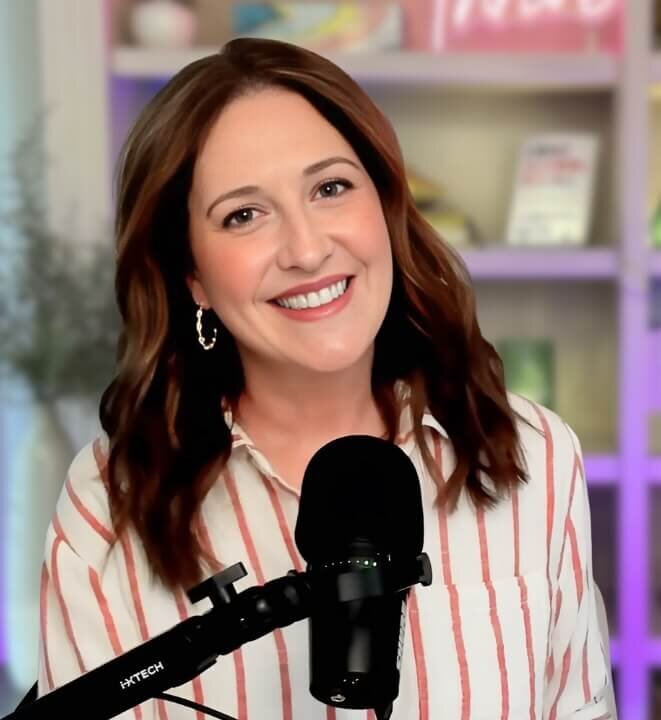
I'm Christy-Faith. I've been in education for over 20 years — in traditional schools and in my own homeschool. I wrote Homeschool Rising and I've helped thousands of families find their footing in that terrifying, exhilarating first year. And I want to tell you something before we go any further:
You are more than qualified to do this. The fact that you're researching before you leap already puts you ahead.
This page is your starting point — not a firehose. I'm going to walk you through exactly what you need to know, and hand you the specific tools that will make this easier than you think.
The New Homeschooler Roadmap
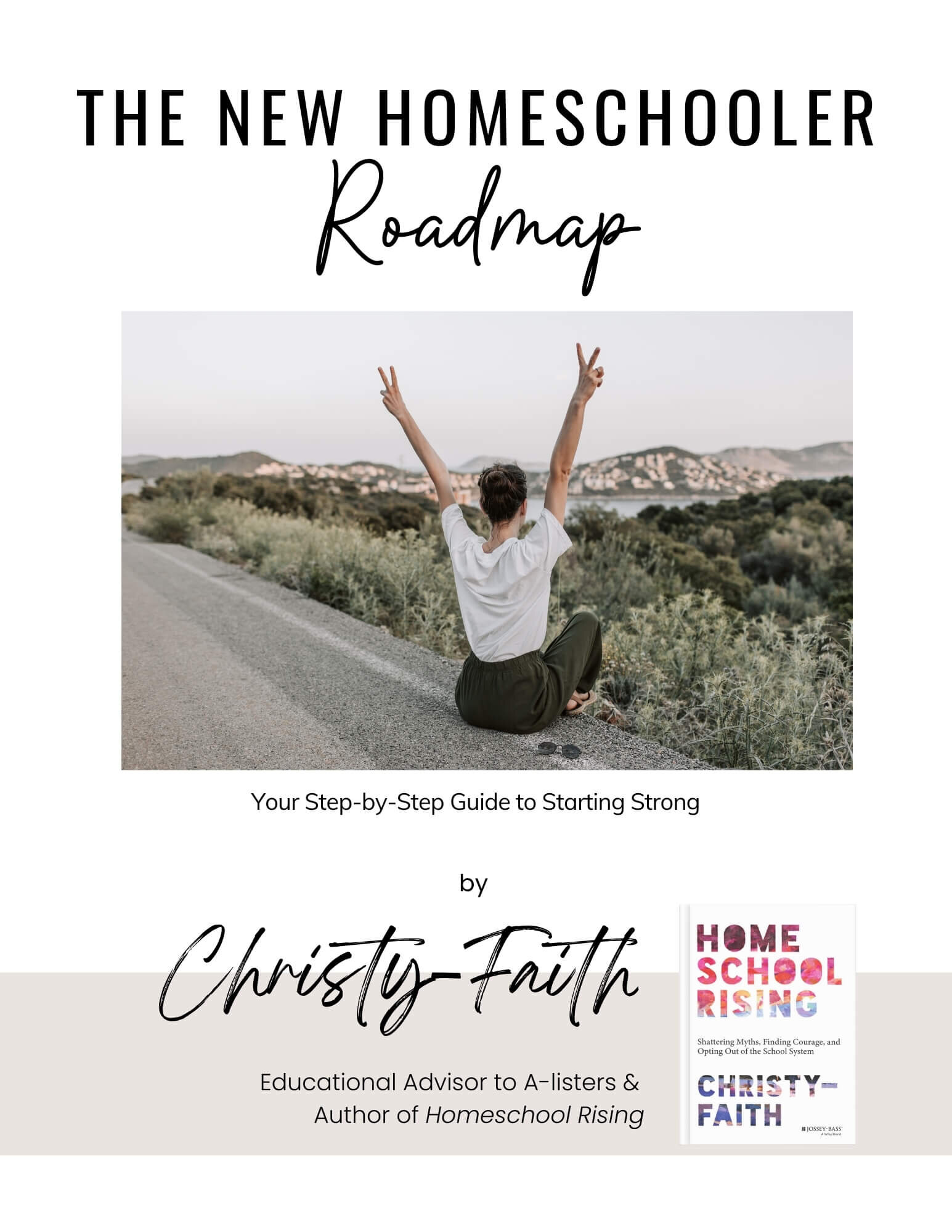
If you want one resource that walks you through the entire journey — from your very first decision through your first full year — this is it. Sequential. Step-by-step. Free.
The 5 things every new homeschooler actually needs to figure out
Before you buy a single curriculum or set up a school room, get clear on these five things. Skipping ahead is the #1 reason new homeschool families burn out in year one.
Know your state's legal requirements
Homeschooling is legal in all 50 states — but the requirements vary significantly. Some states require nothing more than a letter of intent. Others require testing, portfolios, or curriculum approval. You need to know what your state requires before you do anything else.
Get clear on your WHY
This sounds soft but it's the most practical thing I can tell you. Your WHY is what you come back to when the hard days hit — and they will. When your kid refuses to do math. When you question everything. When a well-meaning relative asks if you're sure about this.
Ask yourself: What does my child need that they're not getting? What do I want our days to actually look like? What do I want my kids to remember about their childhood education — not just what they learned, but how it felt?
Write it down. Come back to it.
Find your homeschool style
This is where most new homeschoolers skip straight to curriculum — and it's a mistake. Curriculum is the how. Style is the what and why. If you buy curriculum that doesn't match your style, you'll spend a lot of money on things you don't use.
There are 9 distinct homeschool styles — from classical to Charlotte Mason, from unschooling to unit studies, from Montessori to interest-led learning. Most people land somewhere in the middle, but knowing the landscape changes everything about the decisions you'll make next.
Start simple with curriculum
Once you know your style, curriculum becomes a much smaller decision. Here's the advice I give every single new homeschooler: start with less than you think you need.
You do not need to cover every subject in year one. You do not need thousands of dollars of curriculum before you know what works for your family. Start with math (daily practice matters here), reading (read constantly — to them, with them, everywhere), and one subject your child is genuinely excited about. Add from there.
Find your people
Homeschooling in isolation is one of the fastest paths to burnout. Not because homeschooling is hard — but because it's new, and new things are easier with people who've been there.
Find a local co-op. Connect with families in your area. And if you want a community built specifically around this kind of homeschooling — one that's serious, warm, and full of moms who are actually doing the work — that's exactly what Thrive is.
Want to hear all of this explained? Start with Episode 101.
I made a three-part podcast series specifically for new homeschoolers — because sometimes you need to hear it, not just read it. These three episodes walk you through everything on this page (and more!) in audio form.
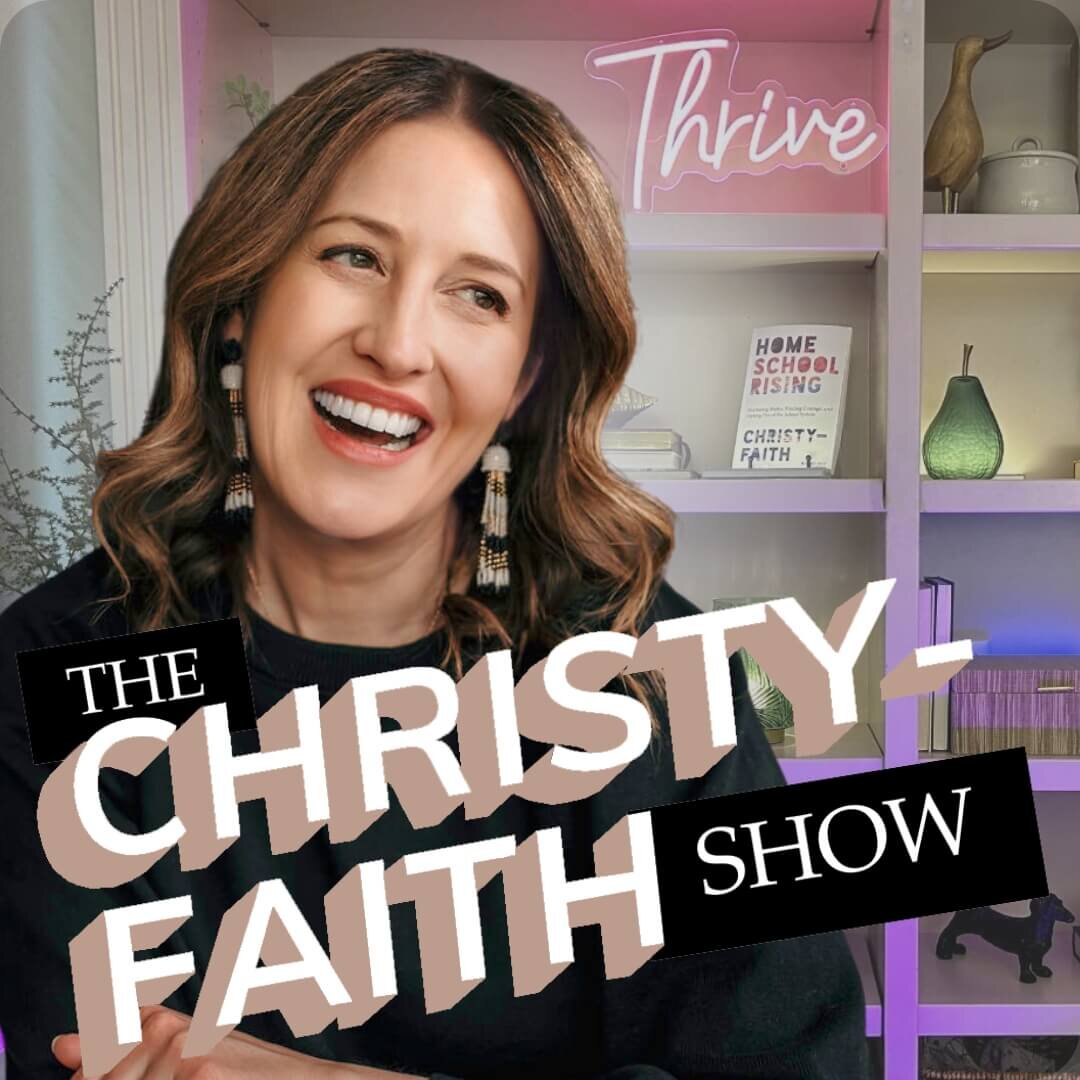
The Christy-Faith Show
Homeschool 101 Series — 3 episodes
The New Homeschooler Roadmap ties all of this together
Everything above — the legal steps, the WHY, the style, the curriculum, the community — is covered in detail inside The New Homeschooler Roadmap. Sequential, start-to-finish, and free.
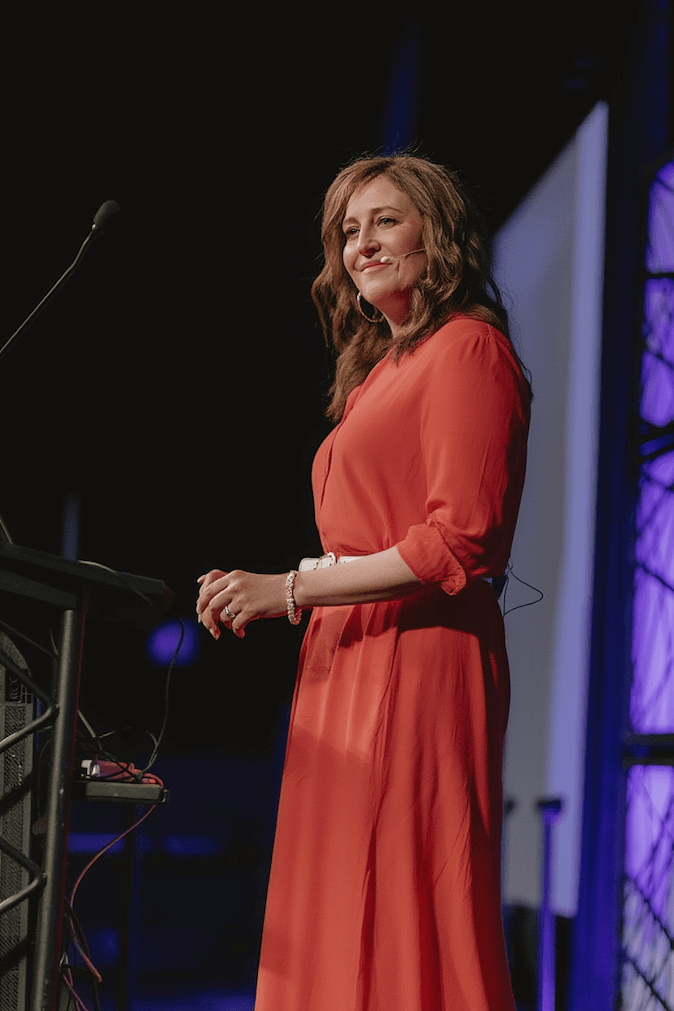
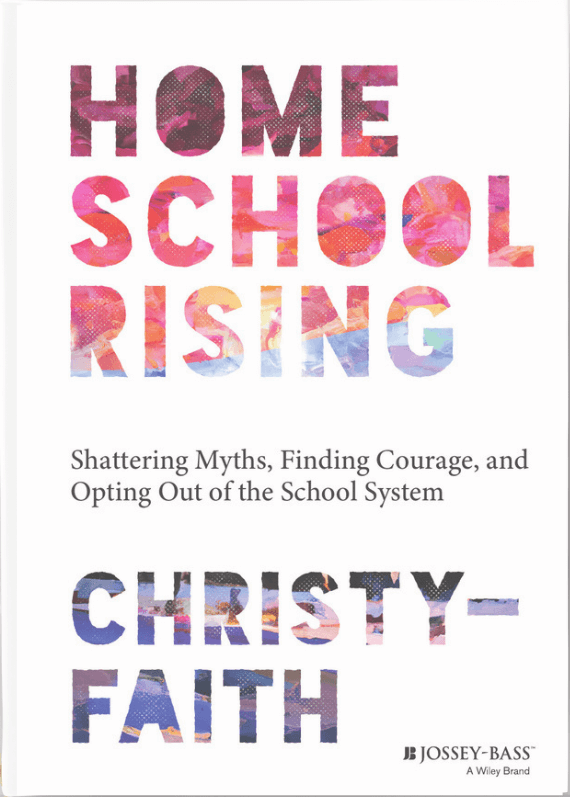
20 years in the classroom — and in the trenches with you
I'm not a blogger who started homeschooling last year and decided to share what worked for me. I'm a 20-year education veteran who has seen both sides — the traditional classroom and the homeschool. I've taught hundreds of kids. I've homeschooled my own. And I wrote Homeschool Rising because I believe homeschooling done right is one of the most powerful things a parent can do for their child.
I also know what goes wrong. I know why families burn out. I know what curriculum mistakes cost people money and motivation. And I know what actually works — not just on paper, but in the real, imperfect, beautiful mess of a real homeschool.
Everything on this page comes from those 20 years.
Want to really get to know me before you commit to anything?
I did a six-part podcast series called Behind the Screen where I pull the curtain back on what our actual homeschool looks like on a real day — not a Pinterest day, a real one.
It's where you'll get a feel for whether my approach and my personality are a fit for your family. If you're on the fence about any of this, start there.
Listen to Behind the Screen — Part 1 →Frequently asked questions about starting homeschooling
Yes — homeschooling is legal in all 50 states in the United States. However, legal requirements vary significantly by state. Some states require nothing more than a letter of intent to a school district. Others require notification, curriculum approval, standardized testing, or portfolio review. The state information page covers the requirements for every state so you can find exactly what applies to your family.
No. The vast majority of states have no teaching credential requirement for homeschool parents. What you need is commitment, organization, and a willingness to learn alongside your kids. After 20 years in education, I consistently say the most important thing a homeschool parent brings to the table is not a degree — it's deep knowledge of and investment in their own child.
Homeschooling can cost anywhere from nearly nothing to several thousand dollars a year, depending on your choices. Families using free resources, library books, and open-source curriculum can homeschool on a very tight budget. Most families land somewhere in the middle. The most important thing to know: expensive does not mean better, especially in your first year. Start with less and add as you learn what works for your family.
The first step is to learn the legal requirements for your state — because they vary widely, and you need to know before you do anything else. Once that's clear, the next step is to get clear on your WHY, then find your homeschool style, then approach curriculum. The New Homeschooler Roadmap walks through this entire sequence in detail.
Start with yourself, not your child. Ask: How do I like to learn? Do I want structure or flexibility? What are my real constraints — time, energy, number of kids, budget? There are 9 distinct homeschool styles: classical, Charlotte Mason, traditional, unschooling, eclectic, unit studies, Montessori, Waldorf, and interest-led learning. The 5-Minute Homeschool Style Finder quiz is designed specifically to help new families find a starting point quickly.
This is one of the most common concerns new homeschool families have — and one of the least warranted. Homeschooled children socialize through co-ops, sports teams, community classes, church groups, neighborhood friendships, and family activities. Because they aren't confined to a classroom for six hours a day, they often have more opportunity for real-world, multi-age social interaction than traditionally schooled kids. Research consistently shows homeschooled children score well on measures of social development and self-confidence.
Almost every homeschool parent has felt this. It's one of the most normal fears there is. Here's what 20 years of experience tells me: if you care enough to ask this question, you are qualified enough to start. You don't have to know everything before you begin. You have to be willing to learn alongside your child — and that willingness is worth more than any credential.
You just need a starting point.
The New Homeschooler Roadmap is that starting point. Free, sequential, built specifically for families standing exactly where you are right now.
And when you're ready to go deeper — curriculum guidance, style coaching, and a community of moms who take this as seriously as you do — that's what Thrive is for.