


Listen here:
Spotify Apple Podcasts YouTube Amazon
How to Start Homeschooling: Homeschool Laws & Choosing Your Style (Part 1/3)
You’ve been Googling “how to start homeschooling” for hours. Every article says something different, and somehow you’re more confused than when you started. Homeschool expert Christy-Faith — with over 20 years in education and a background advising everyone from everyday families to A-list celebrities and billionaires — cuts through the noise in Episode 101 and hands you exactly three things that actually matter when you’re just starting out.
This is Part 1 of the New Homeschooler Series. By the end of this episode, you’ll know your state’s legal requirements, how to make your exit plan, and which homeschool style is the right fit for your family — before you spend a dime on curriculum.
Where Do You Even Start?
If you’re a new homeschooler, the sheer volume of information available can feel paralyzing. Classical or Charlotte Mason? Structured or unschooling? What does your state even require? In this episode, Christy-Faith gives you a clear sequence — just three steps — so you know exactly what to focus on first and what you can stop worrying about for now.
The key insight: overwhelm isn’t not knowing what to do. It’s not knowing what to do next. That’s exactly what this episode fixes.

Step 1: Know Your Homeschool Laws by State
Homeschooling is legal in all 50 states — but every state has its own requirements. Some are notification states, meaning you simply file a letter of intent (sometimes called a Notice of Intent, or NOI) with your school district or state department of education. Others may ask for curriculum plans, attendance records, or year-end assessments. A small handful of states — about five — have ongoing check-ins throughout the year.
The good news: even in states with more requirements, the initial setup is usually just a few hours of paperwork. It sounds more complicated than it is. And Christy-Faith has done the work for you — her state-specific pages walk you through exactly what your state requires, in plain English, step by step.
- Notification states: File a letter of intent — often just a short letter to your district
- More oversight states: May require curriculum plans, attendance records, or assessments
- Low-requirement states: Little to no reporting — you simply homeschool
Find your state page at christy-faith.com/states. That’s Step 1 — done.

Step 2: Making Your Exit Plan
Your exit plan depends on where you’re starting from. There are essentially three scenarios:
- Your child has never enrolled in school: Check your state’s compulsory school age — in most states, you won’t need to do anything until they hit that age. Many states don’t require enrollment until age 6 or 7.
- Your child is currently enrolled: You can withdraw them and begin homeschooling at any time of year. You don’t have to wait until summer. Check your state page for the withdrawal process.
- You’re not sure if you’re ready yet: You’re allowed to take your time. You don’t need to have everything figured out before you start the process.
The bottom line: you have more flexibility than you think. Christy-Faith’s state pages walk through the exact withdrawal process for your state so there’s no guessing involved.
Step 3: Finding Your Homeschool Style
This is where most new homeschoolers get it wrong. They buy curriculum before they know their style — and then wonder why nothing feels right. There are 9 different homeschool approaches, and knowing which one fits your family before you shop will save you hundreds of dollars and months of frustration.
Some of the most common styles include classical, Charlotte Mason, unschooling, traditional school-at-home, and eclectic. Each has a different philosophy, a different daily structure, and a different relationship with curriculum. You’ll naturally lean toward one or two of them — and once you know which, choosing curriculum becomes much clearer.
Christy-Faith’s free 5-Minute Homeschool Style Finder Quiz identifies your style quickly so you can start shopping with intention instead of overwhelm. Take it at christy-faith.com/5-minute-homeschool-style-finder.
Resources Mentioned in This Episode
- State Homeschool Laws Pages — Find your state and get a plain-English walkthrough of your requirements
- 5-Minute Homeschool Style Finder Quiz — Know your style before you buy anything
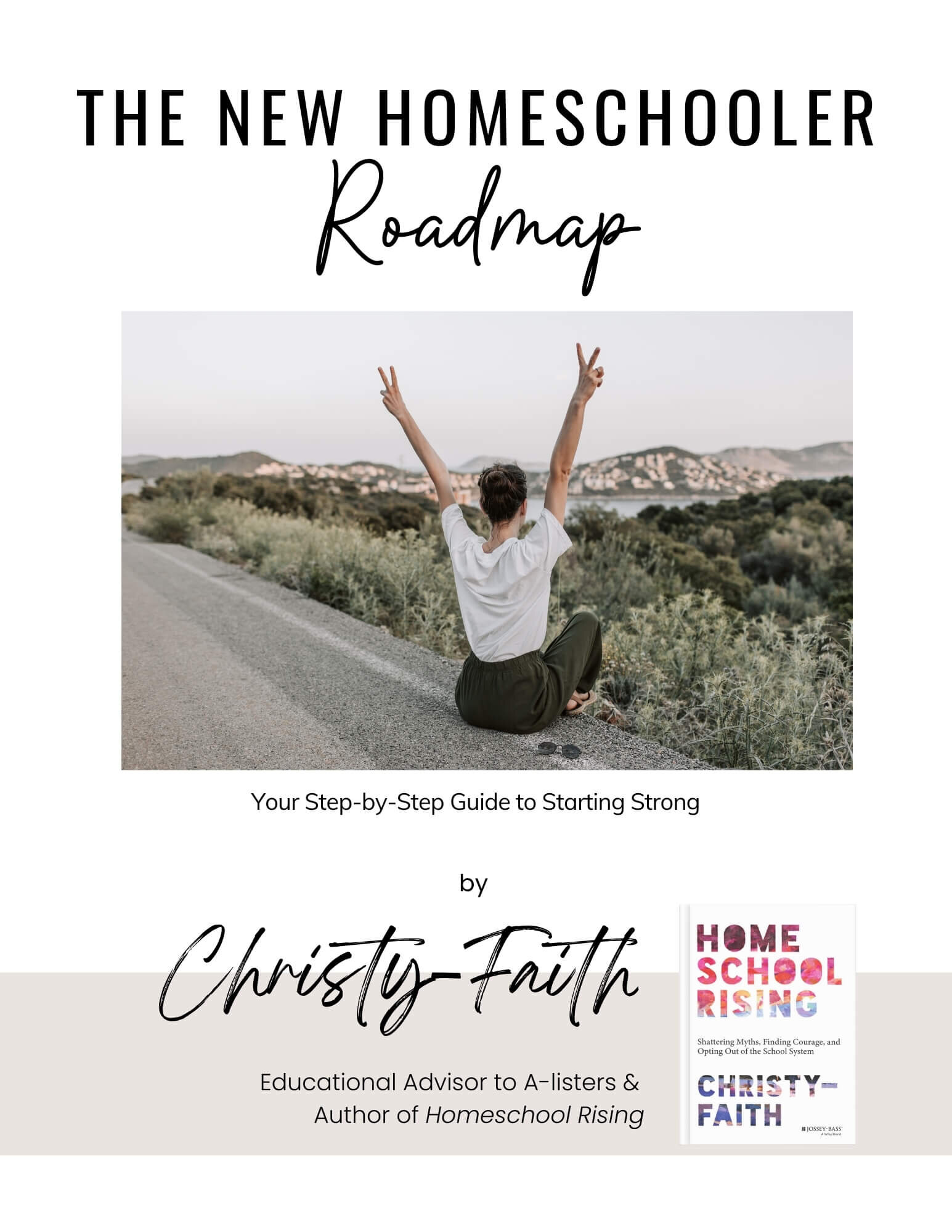
- New Homeschooler’s Roadmap — The free companion guide to this series
- Homeschool Rising — Christy-Faith’s book: shattering myths, finding courage, and opting out of the school system
- The Christy-Faith List — Free directory of homeschool-friendly businesses and providers
- Thrive Homeschool Community — Christy-Faith’s membership community for homeschool moms
🎁 Browse all free resources: christy-faith.com/#freebies
Related Episodes
- Episode 102: How to Choose Homeschool Curriculum // How to Start Homeschooling (Part 2/3)
- Episode 103: Homeschool Schedule & Socialization // How to Start Homeschooling (Part 3/3)
- Browse All Episodes — The Christy-Faith Show episode catalog
Frequently Asked Questions
Is homeschooling legal in all 50 states?
Yes. According to Christy-Faith, homeschooling is legal in all 50 states — but requirements vary significantly by state. Some states require only a simple notification or letter of intent, others require submitted curriculum plans or assessments, and a few have very minimal requirements at all. Christy-Faith’s free state pages at christy-faith.com/states walk through exactly what your state requires in plain English.
What are the different homeschool styles?
Christy-Faith identifies 9 primary homeschool styles, including classical, Charlotte Mason, unschooling, traditional school-at-home, unit studies, and eclectic approaches. Each has a distinct philosophy and daily structure. Knowing your style before purchasing curriculum is one of the most important steps a new homeschooler can take — Christy-Faith’s free 5-Minute Homeschool Style Finder Quiz helps you identify yours quickly.
How do I pull my child out of public school to homeschool?
According to Christy-Faith, you can withdraw your child and begin homeschooling at any time of year — you don’t have to wait until summer. The process varies by state but typically involves notifying the school district and, in some cases, filing a formal letter of intent. Christy-Faith’s state pages walk through the exact withdrawal process for your state so there’s no guesswork.
Do I need a teaching degree or certification to homeschool?
No. Christy-Faith is direct on this point: the vast majority of states have no teacher certification requirement for homeschooling parents. A few states have minimal requirements such as a high school diploma, but formal teaching credentials are not required anywhere in the U.S. The fear that you’re “not qualified” is one of the most common concerns Christy-Faith addresses — and one she calls an absolute lie worth dismantling.
When is the best time to start homeschooling?
Christy-Faith explains that you can start homeschooling at any point in the year — there’s no “right” time to begin. Families with children who have never enrolled can start at any age, subject to their state’s compulsory attendance age (typically 6 or 7). Families withdrawing from traditional school can do so mid-year. The best time to start, according to Christy-Faith, is when your family is ready — not when the calendar says so.

About Christy-Faith
Christy-Faith is a homeschool expert, author, speaker, and the host of The Christy-Faith Show — the podcast for homeschool moms who take their craft seriously. With over 20 years of experience in education, a master’s degree, and a background founding and directing one of the country’s top private learning centers, Christy-Faith has advised everyone from everyday families to A-list celebrities and billionaires on their children’s education. She is the author of Homeschool Rising: Shattering Myths, Finding Courage, and Opting Out of the School System, the founder of the Thrive Homeschool Community, and the creator of the Christy-Faith List — a free directory of homeschool-friendly businesses and providers. A homeschool mom of four, she reaches over 400,000 followers across social media and has built one of the largest and most trusted voices in the homeschool movement.

