


How to Homeschool in Texas
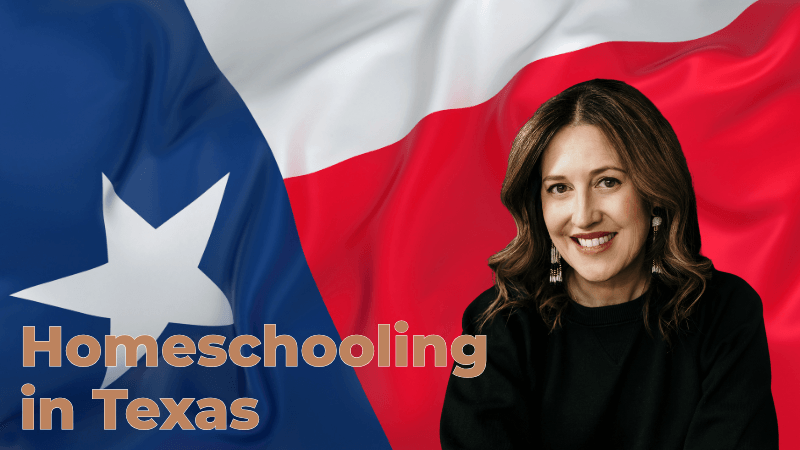
Homeschooling in Texas is completely legal — and Texas families enjoy some of the broadest homeschool freedoms in the country. There is no registration, no Notice of Intent, no standardized testing requirement, and no government approval process. Texas recognizes homeschools as a type of private school under the Texas Supreme Court’s Leeper decision (1994) and the Homeschool Freedom Act of 2025 — which means the rules governing public schools simply do not apply to your homeschool. You decide to homeschool, and you start. Below is everything you need to know to do it legally and confidently.
Start Here: Free Homeschool Roadmap →Free · 26-page guide + 3-part training video series · Instant access
Is Homeschooling Legal in Texas?
Yes — homeschooling is completely legal in Texas. The right to homeschool is grounded in Texas Education Code §25.086(a)(1) and secured by the Texas Supreme Court’s unanimous 1994 ruling in TEA v. Leeper, 893 S.W.2d 432, which established that homeschools qualify as private schools exempt from the state’s compulsory attendance laws. In 2025, the Texas Legislature passed the Homeschool Freedom Act (HB 2674), explicitly prohibiting any state agency from regulating homeschooling — further cementing what Leeper established. Texas is classified as a no-regulation state, the lowest regulation tier in the country.
Texas law provides the following paths for homeschooling families:
- Option 1 — Standard private school model (the Leeper path): The path the overwhelming majority of Texas families follow. Your homeschool is treated as a private school. No notification, no testing, no registration required. You must use a visual curriculum covering the five required subjects and teach in a bona fide manner. This is what the rest of this guide covers in full.
- Option 2 — Accredited correspondence or online school: Enroll your child with an accredited Texas school program (such as Texas Tech ISD or similar). The student is technically enrolled in that school’s program. Credits are more broadly accepted for re-enrollment and certain college programs. This option is more expensive and involves external accountability structures, but may suit families planning a future return to traditional school.
Everything on this page applies specifically to Option 1 — the standard private school model, which is the path most Texas families take.
For virtually every Texas family, Option 1 — the standard private school model — is the right path. The legal protections are among the strongest in the country, the requirements are minimal by design, and there is no approval process whatsoever. You are in complete control of your child’s education from day one.
One exception worth considering: if your family anticipates re-enrolling your child in traditional school — especially at the high school level — an accredited program creates a documented academic record that many schools accept without question. For everyone else, Option 1 is the clear choice. The law is on your side.
Texas Homeschool Requirements at a Glance
The information below applies to Option 1 — the standard private school model. Option 2 (accredited school) has different requirements set by the individual school.
| Requirement | Texas Details (Private School Model) |
|---|---|
| Compulsory School Age | Age 6 as of September 1 of the current school year through the child’s 18th birthday, or through high school graduation — whichever comes first. (Texas Education Code §25.085) |
| Notification Required? | No. No Notice of Intent, no registration, and no contact with any school district or state agency is required to begin homeschooling. Exception: if your child is currently enrolled in public school, you must send a written withdrawal letter before beginning — but this is a withdrawal notice, not a registration or permission request. |
| NOI Must Include | N/A — no Notice of Intent required in Texas. |
| Required Subjects | Reading, spelling, grammar, mathematics, and a study of good citizenship. (Per TEA v. Leeper, 893 S.W.2d 432, Tex. 1994) |
| Instruction Hours Required | None. Texas does not regulate the number of instructional days or hours for homeschools or private schools. |
| Teacher Qualifications | None. The parent, or a person standing in parental authority, may provide instruction. No teaching certificate or college degree required. |
| Assessment Required | None. Texas does not require standardized testing or academic evaluation of homeschool students at any grade level. Testing is voluntary. |
| Record-Keeping | No legal requirement to submit records to any government agency. Keeping curriculum records, grades, and a formal transcript is strongly recommended for college applications and re-enrollment purposes. |
| Regulation Level | None — Texas is a no-regulation state. The 2025 Homeschool Freedom Act (HB 2674) explicitly prohibits state agency regulation of homeschooling. |
How to Start Homeschooling in Texas: Step by Step
The following steps apply to Option 1 — Texas’s standard private school model, the path most families take. The process is intentionally simple — Texas law is designed to keep government out of your homeschool.
Choose Your Homeschool Approach
Most Texas families use the standard private school model (Option 1) — no registration, no approval, full independence. If you want to teach your own children, choose your own curriculum, and operate without external oversight, this is your path. The law is clearly on your side. If your goals include externally recognized transcripts for a future return to traditional schooling or certain college transfer scenarios, look into an accredited correspondence or online program (Option 2) before you begin. For the vast majority of families, Option 1 is everything you need.
Withdraw Your Child from Their Current School
If your child is currently enrolled in a public school, send a written withdrawal letter to the principal before beginning home instruction. Per Texas Education Agency (TEA) policy, the letter must include the date you will begin homeschooling. Homeschooling must begin immediately upon withdrawal — the school will count any gap between withdrawal and the start of home instruction as unexcused absences, which can trigger truancy proceedings. Do not let a gap exist between the last day of public enrollment and the first day of home instruction.
Send your withdrawal letter by Certified Mail — Return Receipt Requested and keep a copy. If the school asks you to complete additional forms or appear in person, you are not required to comply with any request beyond confirming in writing that your children are being privately educated at home. A brief written letter of assurance meets the full legal standard under TEA policy.
Choose Your Curriculum and Cover the 5 Required Subjects
Texas law requires that your curriculum be in visual form — books, workbooks, videos, or an online program — and that it covers the five required subjects: reading, spelling, grammar, mathematics, and a study of good citizenship. Good citizenship is broadly interpreted to include civics, U.S. and Texas history, government, and civic participation. You choose your own curriculum. There is no mandated provider, no approved list, and no district review.
Before spending anything on curriculum, download Christy-Faith’s free Curriculum Recommendations — a curated list of the most reputable homeschool programs on the market, organized by subject. It will save you real money and prevent the paralysis that trips up almost every new family at this stage.
Begin Teaching in a Bona Fide Manner
Texas law requires your homeschool to be bona fide — genuine, not a sham. This simply means you are actually pursuing the curriculum you have chosen and genuinely teaching your children. There is no minimum number of instructional days or hours. No one is counting. No one is checking. The bona fide standard exists to distinguish real homeschools from those that exist only on paper. As long as you are genuinely educating your children — in whatever schedule and style works for your family — your homeschool is in full legal compliance with Texas law.
Keep Voluntary Records for Future Flexibility
Texas law does not require you to submit records to any government agency. However, keeping thorough records is one of the most practical things you can do for your family. Recommended records to keep: curriculum materials and lesson plans, grades and assessment results if you test voluntarily, attendance logs, and — especially for high school students — a formal transcript listing courses, grades, credit hours, and graduation date. As the parent, you serve as the school administrator: you issue the diploma and sign the transcript. Texas law prohibits public colleges and universities from discriminating against homeschool applicants in admissions.
On immunization records: Texas’s school immunization requirements (TAC 25, §§97.61–97.72) apply to students entering or attending public and private schools. As a homeschooler operating under the private school model, you are not submitting records to any school or agency — so there is no filing obligation. Keeping your child’s vaccination records is good practice for healthcare purposes and will be needed if your child ever re-enrolls in a traditional school.
How to Withdraw Your Child from Public School in Texas
If your child is currently enrolled in a public or private school, formally withdraw before you begin homeschooling. Timing matters: homeschooling must begin immediately upon withdrawal. A gap between the withdrawal date and the start of home instruction can result in the school marking your child absent and filing truancy charges.
Here is the recommended approach:
- Write a withdrawal letter addressed to the principal of your child’s current school. State clearly that your child is withdrawing to begin a home-based private education program.
- Include the date you will begin homeschooling. Texas Education Agency policy specifically requires this date. Do not omit it.
- Send by Certified Mail — Return Receipt Requested. This creates a documented record of the date and delivery.
- Keep copies of everything — your letter, postal receipts, and any responses from the school.
- If the school asks you to complete additional forms or come in person, you are not legally required to comply beyond providing a written letter of assurance that your children are being privately educated at home per Texas law. Respond in writing, not in person.
- If your child has never attended a public or private school, this section does not apply. Simply obtain your curriculum and begin.
For individualized guidance — especially if your situation is complicated — listen to Episode 101 of The Christy-Faith Show, which walks through the legal framework and how to start with confidence.

Texas Homeschool Notification Requirements
Texas has no homeschool notification requirement. You are not required to file a Notice of Intent, register with your school district, or contact any state agency before beginning home instruction. This is one of the most important features of homeschooling in Texas — and it is protected by statute and court precedent.
- No Notice of Intent required: Unlike the majority of states, Texas law does not require you to file any notice before beginning home instruction under the private school model. You are not notifying anyone. You are simply starting.
- No registration required: You do not register with the Texas Education Agency, your school district, or any other government body. There is no annual renewal or check-in.
- No curriculum approval required: School districts have no authority to review or approve your curriculum under Texas law. The district does not get to weigh in on what you teach or how.
- No instruction hours to report: Texas does not regulate how many days or hours private schools — including homeschools — operate. There is no reporting period, no attendance threshold, and nothing to count or submit.
- The Homeschool Freedom Act of 2025 (HB 2674) explicitly prohibits state agencies from requiring registration, notification, or any regulation of homeschooling in Texas. This is now statutory law.
- If a school official contacts you: You are not required to comply with any demand beyond providing a written letter of assurance confirming that your children are being privately educated at home. You do not need to invite anyone in, fill out their forms, or present your curriculum for review.
- The one practical action — withdrawal: If your child is currently enrolled in public school, a withdrawal letter is required. This is a notification that your child is no longer a public school student — not a request for permission to homeschool, and not a government filing of any kind.
The withdrawal letter is a courtesy — not a registration requirement. Texas law is clear: you do not need anyone’s permission to homeschool your child.
Homeschool Assessment Requirements in Texas
Texas does not require any standardized testing or academic assessment for homeschool students. There is no grade level at which testing is mandated, no evaluation to submit, and no scores to report to any school district or state agency — ever. Texas homeschool families have complete freedom over whether, when, and how they assess their children’s academic progress.
- No state-required testing, at any grade level: Texas imposes zero standardized test requirements on homeschool families under the private school model.
- No scores to submit: You are not required to submit test results, portfolio reviews, or academic evaluations to any district, agency, or school official at any point during your homeschool years.
- Voluntary testing — why many families choose it: Many Texas homeschool families administer nationally normed achievement tests each year on a voluntary basis. This provides a useful academic benchmark, builds familiarity with test formats before the SAT/ACT, and produces documentation valuable for college applications, dual enrollment programs, and potential future re-enrollment.
- Testing does not affect legal compliance: Whether you test formally, informally, or not at all has no bearing on your status as a legally compliant Texas homeschool. Your compliance depends on teaching the five subjects with a visual curriculum in a bona fide manner — not on test scores.
- High school and college: When your student is ready for college, you will create their transcript as the school administrator. SAT/ACT scores become part of that record. Texas public colleges and universities are legally required to treat homeschool applicants equitably and cannot discriminate based on homeschool status (TEC §51.9241).
If you decide to test voluntarily, connect with a local homeschool group — they can point you toward nationally normed assessments and testing co-ops for your child’s grade level. Find your community through Thrive Homeschool Community.
Frequently Asked Questions About Homeschooling in Texas
Yes — completely legal. Homeschooling in Texas is protected under Texas Education Code §25.086(a)(1), as interpreted by the Texas Supreme Court’s unanimous 1994 ruling in TEA v. Leeper, which established that homeschools qualify as private schools exempt from the state’s compulsory attendance laws. In 2025, the Homeschool Freedom Act (HB 2674) explicitly prohibited state agencies from regulating homeschooling. Texas is classified as a no-regulation state — among the most homeschool-friendly in the country.
No. There is no notification requirement, no registration, and no permission needed from any school district or state agency to begin homeschooling in Texas. If your child is currently enrolled in a public school, you must send a written withdrawal letter — but that is a withdrawal notice, not a request for permission. If your child has never been enrolled in a public or private school, simply obtain your curriculum and begin. No government contact is required.
None. Texas law requires only that instruction be provided by a parent or a person standing in parental authority. No teaching certificate, college degree, background check, or special training is required. You are qualified to educate your own child.
Texas requires instruction in five subjects: reading, spelling, grammar, mathematics, and a study of good citizenship. Good citizenship is broadly interpreted to include civics, U.S. and Texas history, government, and civic participation. You choose your own curriculum — no specific provider is mandated and no approved curriculum list exists. The curriculum must be in visual form (books, workbooks, video, or an online program) and must be pursued genuinely.
Yes. There is no requirement to begin at the start of the school year. If your child is currently enrolled in public school, send a written withdrawal letter stating the date you will begin homeschooling — and start homeschooling immediately upon withdrawal to avoid truancy issues. There are no instruction hour or day minimums to calculate or prorate. You can start any day of the year.
No. Texas does not require homeschool students to take any standardized tests or submit evaluation results to any government agency, at any grade level. Testing is entirely voluntary. Many families choose to administer nationally normed achievement tests for benchmarking and to build documentation for college applications — but this is a personal choice, not a legal requirement.
Texas’s compulsory attendance law applies to children who are 6 years old as of September 1 of the current school year and who have not yet reached their 18th birthday, or who have not yet graduated from high school. Once a student turns 18 or graduates, compulsory attendance no longer applies — though many families continue homeschooling through graduation regardless of age. (Texas Education Code §25.085)
Under the Leeper decision, a Texas homeschool must be bona fide — meaning genuine, not a sham. This simply means you are actually pursuing the curriculum you have chosen and genuinely teaching your children. It does not require a formal classroom, a set daily schedule, or a specific number of instructional hours. A Texas homeschool is presumed bona fide when parents provide assurance that the five required subjects are being taught with a visual curriculum. As long as you are genuinely educating your children, your homeschool is in full legal compliance.
You Can Do This
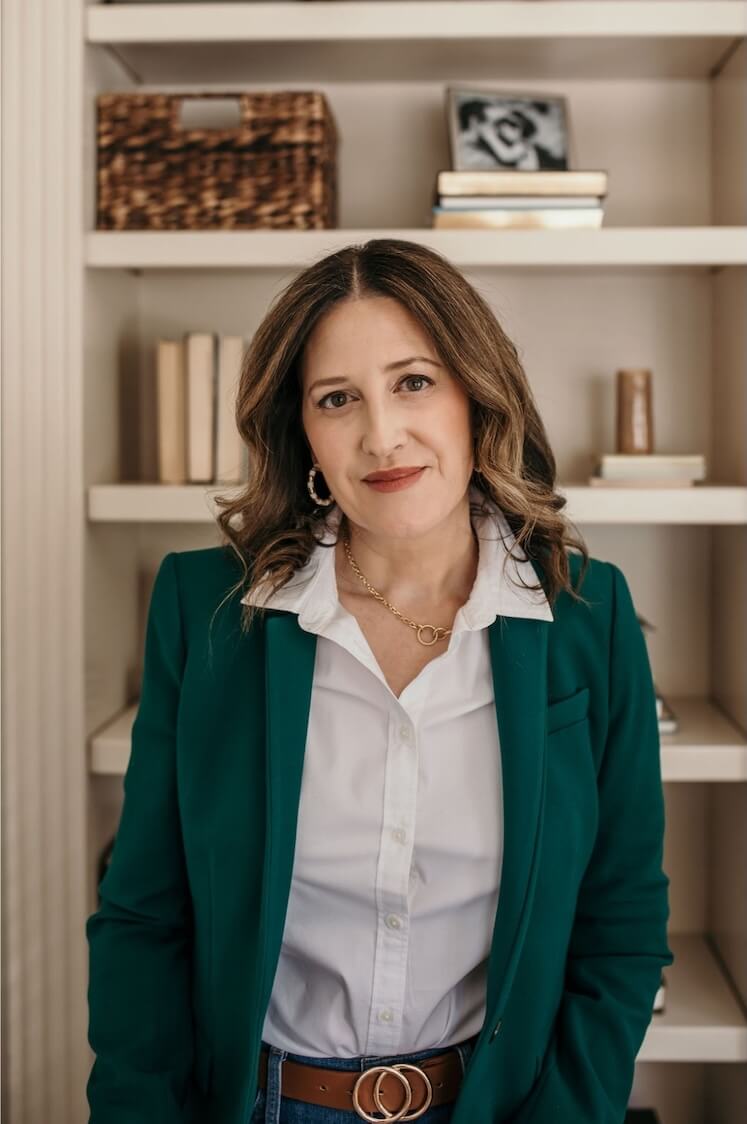
I know what it feels like to be exactly where you are right now — staring at a browser full of tabs, wondering if you’re actually qualified to do this, with somewhere in the back of your mind the question: but what if I mess this up?
Here’s what 20+ years in education and homeschooling my own four kids has taught me: the parents who do this well are not the ones with teaching degrees. They’re the ones who care deeply, who stay curious, and who show up for their kids every single day. That’s why you’re here. That’s the qualification that matters.
Texas’s requirements under the private school model are genuinely as close to zero as you’ll find anywhere in the country. You need a visual curriculum that covers five subjects — reading, spelling, grammar, math, and a study of good citizenship — and you need to teach it genuinely. No forms to file. No one to report to. No approval process. The Texas Supreme Court secured these freedoms in 1994, and the Texas Legislature made them even stronger in 2025. You have the law completely on your side.
If you want to go deeper — not just the legal requirements, but the full picture of how to build a homeschool that actually works — my book Homeschool Rising, published by Wiley, was written for exactly this season. And when you’re ready for an ongoing community of families who get it, Thrive Homeschool Community is where we do life together every day.
Start with the Roadmap below. You’ve already taken the hardest step.
Start Your Texas Homeschool Journey — Free
The exact 8 steps to start your homeschool — in order, without the chaos. A 26-page roadmap and a free 3-part training video series, delivered instantly.
Start Here: Free Homeschool Roadmap →Free · Instant access · No spam
Want to Go Deeper? Start With These Episodes.
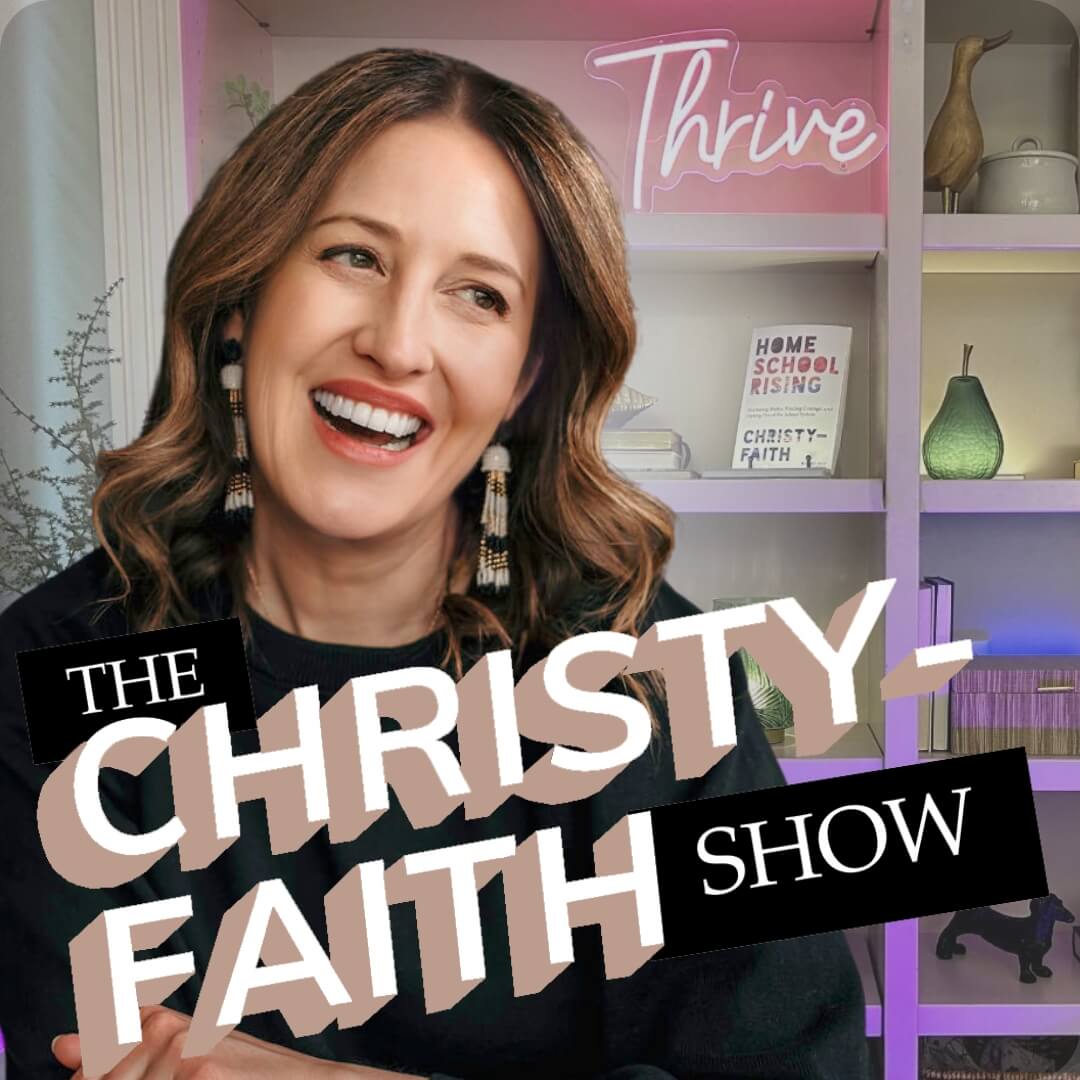
Three episodes of The Christy-Faith Show built specifically for families just starting out. Listen in order — each one picks up exactly where the last left off.
How to Start Homeschooling (Part 1/3) — The Legal Stuff & Choosing the Right Approach
Texas’s legal framework explained clearly, your homeschool approach options, and exactly how to choose the right path for your family.
Listen now →Finding Homeschool Curriculum & Resources // How to Start Homeschooling (Part 2/3)
How to find curriculum without getting overwhelmed — and the mistake almost every new homeschool family makes when buying their first materials.
Listen now →Creating Your Schedule & Finding Socialization // How to Start Homeschooling (Part 3/3)
Build a schedule that works for real family life, and find your Texas homeschool community — the socialization question answered for good.
Listen now →Texas Homeschool Resources
- Free Curriculum Recommendations — Christy-Faith’s curated list of the most reputable homeschool programs, by subject
- The New Homeschooler Roadmap — Free 26-page guide + 3-part training video series
- How to Homeschool by State — Guides for all 50 states
- Thrive Homeschool Community — Ongoing support, encouragement, and community
- Homeschool Rising by Christy-Faith — Discover why there is no better place to educate a child than in a loving home with a motivated parent.
- Christy-Faith’s List — Curated Texas homeschool resources and organizations

Disclaimer: The information on this page is intended for general guidance only — not legal advice. It reflects our best understanding of the state Department of Education. Homeschool laws can change. Always verify current requirements with an up-to-date legal source. Last update: April 2026.