


How to Homeschool in Oklahoma
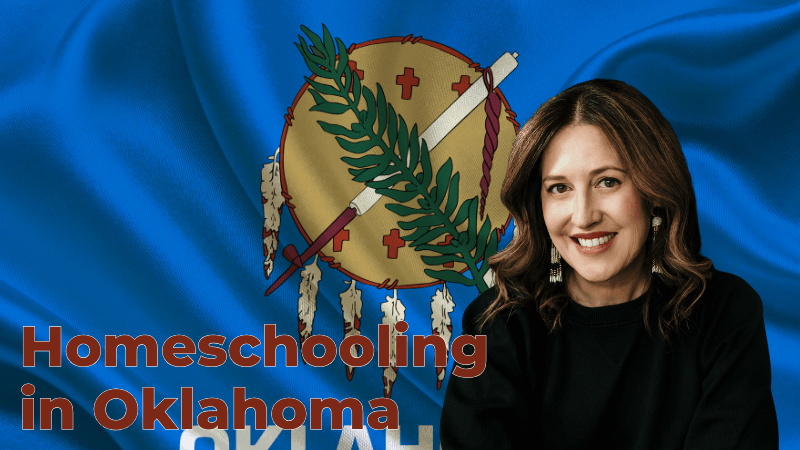
Homeschooling is completely legal in Oklahoma — and easier here than in almost any other state in the country. Oklahoma is the only state in the nation to protect homeschooling rights in its state constitution (Oklahoma Constitution, Article 13, Section 4). There is one legal path, no notification requirement, no standardized testing, no teacher qualifications, and no government oversight. The guiding legal standard, established by the 1973 Oklahoma Attorney General opinion, is simple: provide instruction in good faith and in a manner equivalent to a public school education. The practical benchmark? Teach your child for 180 days per year.
Start Here: Free Homeschool Roadmap →Free · 26-page guide + 3-part training video series · Instant access
Is Homeschooling Legal in Oklahoma?
Yes — homeschooling is completely legal in Oklahoma. It is protected under Oklahoma’s compulsory attendance statute (70 O.S. § 10-105), which recognizes home instruction as a valid alternative to public and private school enrollment. The legal standard for Oklahoma homeschoolers was established by the 1973 Oklahoma Attorney General opinion, which holds that home instruction satisfies the compulsory attendance law when it is provided in good faith and is equivalent in fact to the education provided by the state.
Oklahoma is classified as a no-notice, low-regulation state — one of the least restrictive in the country. There is one legal path for Oklahoma homeschooling families:
- Home instruction under Oklahoma’s compulsory attendance statute: Teach your child at home for 180 days per year, providing instruction in good faith and with content equivalent to a public school education. No notification to the state or school district is required. No testing. No teacher qualifications. No curriculum approval. No government oversight. This is the only path, and it applies to every Oklahoma homeschool family.
Oklahoma holds a unique distinction: it is the only state in the nation to explicitly protect the right to homeschool in its state constitution — a protection established in Article 13, Section 4.
If you’re in Oklahoma, you are in one of the best possible states to homeschool. There’s nothing to choose between — one path, no paperwork to file with the state, no testing requirements, no qualifications to meet. You are legally free to begin the moment you decide to.
My recommendation: stop worrying about bureaucracy and focus your energy on building a great homeschool. Oklahoma trusts you with that responsibility entirely. Commit to 180 days of quality instruction each year, keep your own voluntary records, and use the freedom this state gives you to create something genuinely extraordinary for your family. The steps below will walk you through exactly how to get started with confidence.
Oklahoma Homeschool Requirements at a Glance
| Requirement | Oklahoma Details |
|---|---|
| Compulsory School Age | Ages 5 through 18 |
| Notification Required? | No — Oklahoma does not require parents to notify the state, the local school district, or any other authority before or during homeschooling |
| NOI Must Include | N/A — no notification required |
| Required Subjects | None legally mandated — good-faith equivalency to public school education is the guiding standard |
| Instruction Days Required | 180 days per year |
| Teacher Qualifications | None required — any parent or guardian may homeschool |
| Assessment Required | None required |
| Record-Keeping | Not legally required — voluntary record-keeping is strongly recommended |
| Immunization Required | No — homeschoolers are not subject to school immunization mandates |
| Regulation Level | No notice, Low regulation |

How to Start Homeschooling in Oklahoma: Step by Step
Because Oklahoma has no filing requirements, getting started is genuinely straightforward. Here are the five steps every new Oklahoma homeschool family should take.
Understand Oklahoma’s One Legal Path
Oklahoma homeschooling is governed by the state’s compulsory attendance statute (70 O.S. § 10-105) and the 1973 Oklahoma Attorney General opinion. That opinion establishes the legal standard: home instruction satisfies compulsory attendance when it is provided in good faith and is equivalent in fact to public school education. There is one path, no paperwork to file with the state, and no government approval to seek. You are legally free to begin as soon as you decide to. The one concrete benchmark: commit to 180 days of instruction per year.
Withdraw Your Child from Their Current School
If your child is currently enrolled in a public or private school, formally withdraw before you begin homeschooling. Oklahoma does not require you to notify anyone of your intent to homeschool — but withdrawing your child from enrollment protects you from truancy concerns. Write a withdrawal letter to the principal of your child’s current school, state that your child is withdrawing to begin a home education program, and send it by Certified Mail — Return Receipt Requested. Keep a copy of the letter, your postal receipt, and any response from the school.
If your child has never been enrolled in a public or private school, this step does not apply to you — you may simply begin homeschooling.
Choose Your Curriculum and Plan for 180 Days
Oklahoma gives you complete freedom to choose your curriculum and teaching approach. The 180-day requirement is the one concrete standard in Oklahoma law. You decide what subjects to cover, which materials to use, and how to structure your year. That said, covering core academics — language arts, mathematics, science, and social studies — is the most straightforward way to meet the good-faith equivalency standard. Before spending anything on curriculum, download Christy-Faith’s free Curriculum Recommendations — a curated list of the most reputable homeschool programs on the market, organized by subject.
Teach with Good-Faith Equivalency as Your Standard
Oklahoma courts have held that homeschool instruction must be provided in good faith and be equivalent in fact to public school education. In practical terms, this means covering core academics with genuine care and effort — not just meeting a checklist. You are not required to follow state academic standards or use a mandated curriculum. Use the public school framework as a reference point, not a constraint. The families who do this best focus on their child’s actual learning, and Oklahoma’s legal framework fully supports that approach.
Keep Voluntary Records to Protect Your Family
Oklahoma does not legally require homeschool families to maintain records. Even so, keeping your own records is one of the most practical decisions you can make. Attendance logs, a portfolio of your child’s work, a running list of subjects covered, and samples of completed assignments can be invaluable for college applications, employment, custody situations, or any future circumstance where demonstrating educational history matters. A simple binder updated regularly is all you need — and the peace of mind is well worth it.

How to Withdraw Your Child from Public School in Oklahoma
If your child is currently enrolled in a public or private school, formally withdraw before you begin homeschooling. If you are starting mid-year, do this before your child’s first day of home instruction. If you are starting after the school year ends, withdraw before the next school year begins so the school does not mark your child as absent or truant.
Here is the recommended approach:
- Write a withdrawal letter addressed to the principal of the school your child currently attends. State that your child is withdrawing to begin a home education program.
- Send by Certified Mail — Return Receipt Requested. This creates a documented paper trail of the date and delivery.
- Keep copies of everything — your letter, any postal receipts, and any responses from the school.
- Local schools may have specific forms or procedures. Contact your school to ask — but you are not required to use a specific form to withdraw in Oklahoma.
- If your child has never attended a public or private school, this section does not apply to you.
For individualized guidance on the withdrawal process and how to launch your homeschool with confidence, listen to Episode 101 of The Christy-Faith Show.

Oklahoma Homeschool Notification Requirements
Oklahoma does not require any notification to homeschool. You are not required to register with the state, notify your local school district, file a Notice of Intent, or seek approval from any government authority — at any point before or during your homeschool journey.
- No Notice of Intent required: Unlike most states, Oklahoma parents do not file an annual notification with any school district or state agency.
- No state registration: There is no state database, registry, or enrollment system for homeschoolers in Oklahoma.
- No annual renewal: There is nothing to renew. Each year, simply continue teaching your child.
- No curriculum approval required: You do not submit your curriculum plan to any authority for review or sign-off.
- Voluntary communication can help: If your child is withdrawing from a public school, we recommend informing the school in writing (see the Withdrawal section above). This is not legally required — but it prevents the school from marking your child absent or truant and resolves any confusion before it begins.
Oklahoma’s no-notice framework places the responsibility — and the extraordinary freedom — entirely in your hands. That is a gift worth taking seriously.
Homeschool Assessment Requirements in Oklahoma
Oklahoma does not require homeschoolers to take any standardized tests or submit to any formal assessment. There is no testing requirement at any grade level, no mandatory portfolio review, no external evaluator required, and no results to submit to the state or school district.
- No mandated testing: Standardized achievement tests are not required by Oklahoma law for homeschool students at any grade level.
- No portfolio review: You are not required to submit your child’s work for review by the school district or any other authority.
- No external evaluator required: There is no requirement for a certified teacher, psychologist, or other professional to assess your child’s progress.
- Testing is always your choice: Many Oklahoma families use standardized tests or other progress-tracking tools voluntarily — for college preparation, personal benchmarking, or peace of mind. The decision is entirely yours.
If your child is college-bound, many universities still consider standardized test scores. Oklahoma also offers concurrent enrollment programs and the Oklahoma’s Promise scholarship for eligible homeschool students. For current program details and eligibility requirements, verify directly with the Oklahoma State Regents for Higher Education.
Frequently Asked Questions About Homeschooling in Oklahoma
Yes — completely legal. Homeschooling in Oklahoma is protected under the state’s compulsory attendance statute (70 O.S. § 10-105), which recognizes home instruction as a valid alternative to public and private school enrollment. Oklahoma also holds a unique national distinction: it is the only state in the country to protect homeschooling rights in its state constitution (Article 13, Section 4). Oklahoma is classified as a no-notice, low-regulation state — one of the least restrictive in the nation.
No. Oklahoma does not require parents to notify the state, the local school district, or any other authority before or during homeschooling. There is no Notice of Intent, no annual registration, and no approval process. If your child is currently enrolled in a public or private school, we recommend sending a written withdrawal letter to the principal — not because it is required, but to prevent the school from marking your child absent or truant.
None. Oklahoma law does not require parents or home instructors to hold a teaching certificate, college degree, or any other formal qualification. Any parent or guardian may homeschool their child. The one standard the law establishes — through the 1973 Attorney General opinion — is that instruction must be provided in good faith and be equivalent to the education provided by public schools. That is a standard of intention and effort, not credentials.
No specific subjects are legally mandated for Oklahoma homeschoolers. The guiding legal standard is that instruction should be equivalent in fact to public school education and provided in good faith. In practice, covering core academics — reading and language arts, mathematics, science, and social studies — is the most straightforward way to meet that standard. You choose your own curriculum; no specific provider is required or approved by the state.
Yes. There is no requirement to begin at the start of a school year. Because no notification is required, you may begin homeschooling at any point during the year. If your child is currently enrolled in school, formally withdraw them in writing before their first day of home instruction. Send the withdrawal letter to the school principal by Certified Mail and keep a copy for your records.
No. Oklahoma does not require homeschoolers to take any standardized tests, submit to portfolio reviews, or participate in any formal assessment process. Testing is entirely optional. Many families use standardized tests or progress-tracking tools voluntarily — particularly for college planning — but there is no legal requirement to do so at any grade level.
Oklahoma’s compulsory attendance law applies to children ages 5 through 18. Homeschooling fully satisfies this requirement. If your child is younger than 5, you are not required to homeschool — but you are welcome to begin early if you choose. Once your child turns 5, home instruction counts as meeting compulsory attendance requirements under Oklahoma law.
Very few — and they are minimal. The one concrete requirement Oklahoma law establishes is 180 days of instruction per year. Beyond that, the guiding standard — from the 1973 Oklahoma Attorney General opinion — is that home instruction must be provided in good faith and be equivalent in fact to a public school education. There is no notification, no testing, no teacher qualifications, no curriculum approval, and no government oversight. Oklahoma homeschoolers operate with some of the greatest educational freedom of any state in the country.
You Can Do This
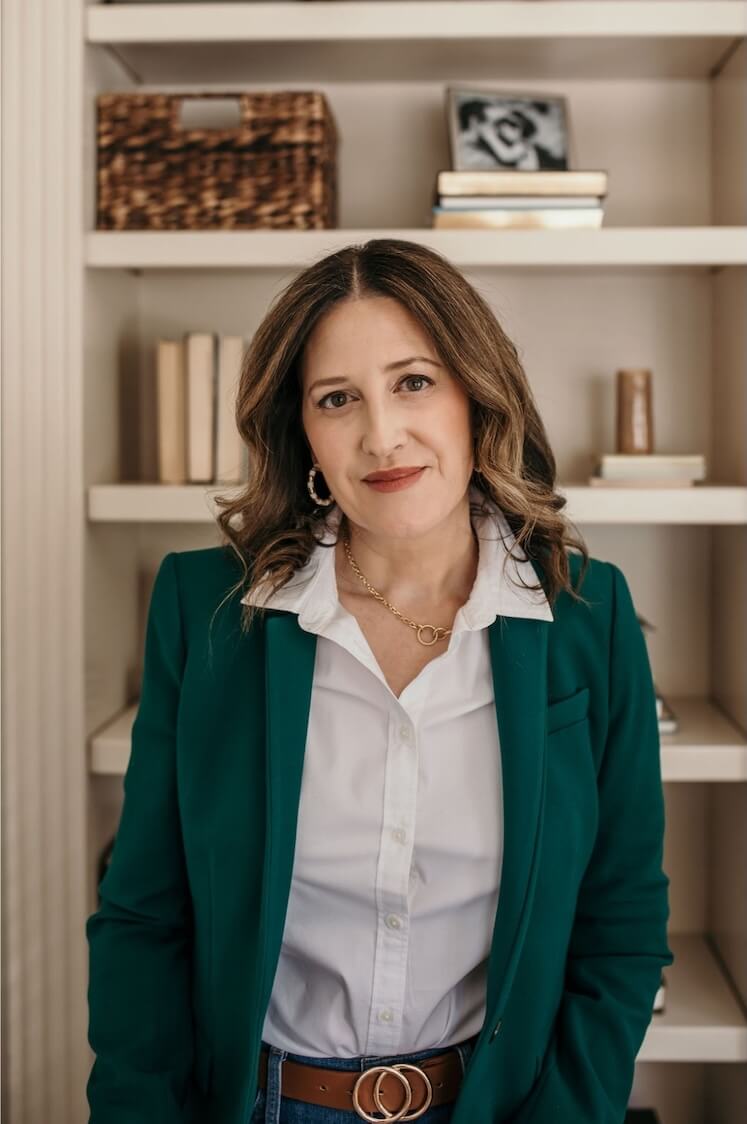
I know what it feels like to be exactly where you are right now — staring at requirements, wondering if you’re actually qualified for this, and somewhere in the back of your mind asking: but what if I mess this up?
Here’s what 20+ years in education and homeschooling my own four kids has taught me: the parents who do this well are not the ones with teaching degrees. They’re the ones who care deeply, who stay curious, and who show up for their kids every single day. That’s why you’re here. That’s the qualification that matters.
Oklahoma asks for one thing: 180 days of instruction, provided with genuine care and good-faith effort. That is the entire legal framework. And you are already meeting that standard just by doing this research and showing up. The freedom Oklahoma gives you is extraordinary — use it to build something that truly fits your child, not just something that checks a government box.
If you want to go deeper — not just the legal requirements, but the full picture of how to build a homeschool that actually works — my book Homeschool Rising, published by Wiley, was written for exactly this season. And when you’re ready for an ongoing community of families who get it, Thrive Homeschool Community is where we do life together every day.
Start with the Roadmap below. You’ve already taken the hardest step.
Start Your Oklahoma Homeschool Journey — Free
The exact 8 steps to start your homeschool — in order, without the chaos. A 26-page roadmap and a free 3-part training video series, delivered instantly.
Start Here: Free Homeschool Roadmap →Free · Instant access · No spam
Want to Go Deeper? Start With These Episodes.
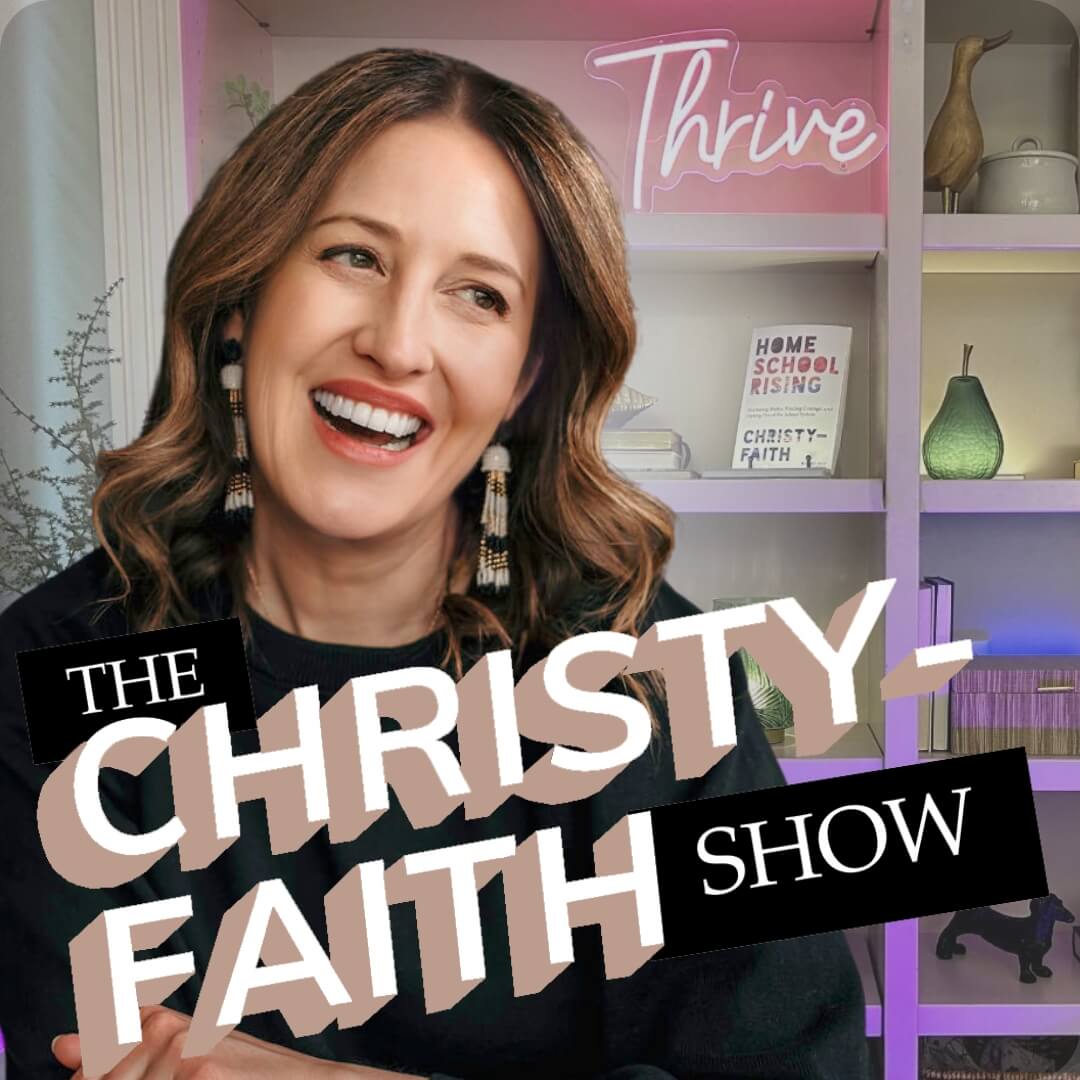
Three episodes of The Christy-Faith Show built specifically for families just starting out. Listen in order — each one picks up exactly where the last left off.
How to Start Homeschooling (Part 1/3) — The Legal Stuff & Choosing the Right Approach
Oklahoma’s legal framework explained clearly, your homeschool approach options, and exactly how to choose the right path for your family.
Listen now →Finding Homeschool Curriculum & Resources // How to Start Homeschooling (Part 2/3)
How to find curriculum without getting overwhelmed — and the mistake almost every new homeschool family makes when buying their first materials.
Listen now →Creating Your Schedule & Finding Socialization // How to Start Homeschooling (Part 3/3)
Build a schedule that works for real family life, and find your Oklahoma homeschool community — the socialization question answered for good.
Listen now →Oklahoma Homeschool Resources
- Free Curriculum Recommendations — Christy-Faith’s curated list of the most reputable homeschool programs, by subject
- The New Homeschooler Roadmap — Free 26-page guide + 3-part training video series
- How to Homeschool by State — Guides for all 50 states
- Thrive Homeschool Community — Ongoing support, encouragement, and community
- Homeschool Rising by Christy-Faith — Discover why there is no better place to educate a child than in a loving home with a motivated parent.
- Christy-Faith’s List — Curated Oklahoma homeschool resources and organizations

Disclaimer: The information on this page is intended for general guidance only — not legal advice. It reflects our best understanding of the state Department of Education. Homeschool laws can change. Always verify current requirements with an up-to-date legal source. Last update: April 2026.

