


How to Homeschool in Colorado
Homeschooling in Colorado is completely legal under Colorado Revised Statutes § 22-33-104.5. Colorado offers three distinct legal paths for homeschooling families, and the one you choose determines your specific requirements. Most families homeschool under the state’s home education statute — which requires a notice of intent, instruction in required subjects, attendance and immunization records, and periodic student evaluations. Whether you’re pulling your child out mid-year or planning ahead for next fall, here’s a clear breakdown of every requirement and how to get started with confidence.
Start Here: Free Homeschool Roadmap →Free · 26-page guide + 3-part training video series · Instant access
Is Homeschooling Legal in Colorado?
Yes — homeschooling is completely legal in Colorado. The right to provide home-based education is protected under Colorado Revised Statutes § 22-33-104.5, which has been in place since 1988. Colorado is classified as a moderately regulated state.
Colorado law provides three legal options for homeschooling families:
- Option 1 — Home education statute: The most common path. Requires a notice of intent, instruction in required subjects, record-keeping, and periodic student evaluations. This is what the rest of this guide covers in detail.
- Option 2 — Independent/umbrella school: Enroll your child with an established Colorado independent school that supervises your home instruction. Requirements vary by school. Two or more homeschool families can also establish their own independent school.
- Option 3 — Certified teacher: If the instructor (parent or designated adult) holds a valid Colorado teaching certificate, there are no notification, assessment, or other requirements under the statute.
The steps, requirements, and FAQs below apply specifically to Option 1 — the home education statute, which is the path most families follow.
For most Colorado families, Option 1 — the home education statute — is the clearest and most straightforward path. The requirements are well-documented, thousands of Colorado families follow this route every year, and you always know exactly where you stand legally.
One exception worth knowing: if a parent or designated instructor in your home holds a valid Colorado teaching certificate, Option 3 is the simplest path of all — with zero notification, assessment, or record-keeping requirements under the statute. If that applies to anyone in your family or household, it’s worth exploring. For everyone else, Option 1 is where to start.
Colorado Homeschool Requirements at a Glance
The information below applies to Option 1 — the home education statute. Options 2 and 3 have different requirements.
| Requirement | Colorado Details (Option 1) |
|---|---|
| Compulsory School Age | Children who are 6 years old on or before August 1 of the current school year, and under age 17. Under Option 1, the NOI must be filed when the child turns 6 by Aug. 1, but actual instruction may begin at age 7. |
| Notification Required? | Yes — written Notice of Intent filed 14 days before beginning; renewed annually. May be filed with any school district in Colorado. |
| NOI Must Include | Names, ages, place of residence, and number of attendance hours for each child |
| Required Subjects | Reading, writing, speaking, mathematics, history, civics, literature, science, and the United States Constitution |
| Instruction Hours Required | 172 days of instruction, averaging 4 hours per day |
| Teacher Qualifications | None for Options 1 and 2. Option 3 requires a valid Colorado teaching certificate. |
| Assessment Required | Grades 3, 5, 7, 9, and 11. Options: nationally standardized achievement test, or evaluation by a qualified person (see Testing section below) |
| Record-Keeping | Attendance records, test and evaluation results, and immunization records — kept permanently |
| Regulation Level | Moderate |

How to Start Homeschooling in Colorado: Step by Step
The following steps apply to Option 1 — homeschooling under Colorado’s home education statute, which is the most common path for families.
Choose Your Homeschool Option
Colorado law offers three ways to legally homeschool. Most families use Option 1 (home education statute) and follow the steps below. Option 2 (independent/umbrella school) means enrolling with a Colorado independent school that supervises your home instruction — requirements vary by school. Option 3 applies only if the instructor holds a valid Colorado teaching certificate, in which case no notification or assessment is required at all. Decide which path fits your family before taking any other step.
File Your Notice of Intent with a Colorado School District
Under Option 1, submit a written Notice of Intent at least 14 days before beginning home-based education. You may file with any school district in Colorado — it does not have to be your local or neighborhood district. Your notice must include: the names, ages, place of residence, and number of attendance hours for each child participating. File this notice annually thereafter. We recommend sending all correspondence by Certified Mail — Return Receipt Requested and keeping copies for your records.
Note: If your child was habitually truant in the six months before you begin homeschooling, the school district may request a curriculum outline.
Formally Withdraw Your Child from Their Current School
If your child is currently enrolled in a public or private school, formally withdraw before you begin homeschooling. If starting during the school year, send a withdrawal letter to the principal of the school your child currently attends. If starting after the school year ends, withdraw before the next year begins so the school does not mark your child absent or truant. We recommend Certified Mail — Return Receipt Requested. Keep copies of all paperwork. Note: if your child has never attended a public or private school, this step does not apply.
Note: Local schools may have specific forms or withdrawal procedures. Contact your school directly to ask about their process.
Teach Colorado’s Required Subjects
Under Option 1, you are required to provide 172 days of instruction, averaging four hours per day, covering: reading, writing, and speaking; mathematics; history; civics; literature; science; and the United States Constitution. You choose your own curriculum — no mandated provider. Before spending anything on curriculum, download Christy-Faith’s free Curriculum Recommendations — a curated list of the most reputable homeschool programs on the market, organized by subject.
Keep Required Records and Plan for Assessments in Required Grade Years
Under Option 1, you must keep the following records permanently: attendance records, test and evaluation results, and immunization records. On immunization: Colorado law requires vaccination per Colorado Board of Health rule 6 CCR 1009-2 — however, both a medical exemption and a nonmedical (religious) exemption are available by filing the official exemption form under C.R.S. § 25-4-902. Exemption forms are available on the CDPHE website (cdphe.colorado.gov). All records must be made available to the school district that received your NOI upon 14 days’ written notice if the superintendent has probable cause of non-compliance. Regarding assessments: in grades 3, 5, 7, 9, and 11, your child must be evaluated. See the Testing section below for your options and what happens if scores are low.
How to Withdraw Your Child from Public School in Colorado
If your child is currently enrolled in a public or private school, formally withdraw before you begin homeschooling. If you are starting mid-year, do this before your child’s first day of home instruction. If you are starting after the school year ends, withdraw before the next school year begins so the school does not mark your child as absent or truant.
Here is the recommended approach:
- Write a withdrawal letter addressed to the principal of the school your child currently attends. State that your child is withdrawing to begin a home-based education program.
- Send by Certified Mail — Return Receipt Requested. This creates a documented paper trail of the date and delivery.
- Keep copies of everything — your letter, any postal receipts, and any responses from the school.
- Local schools may have specific forms or procedures. Contact your school to ask about their process.
- If your child has never attended a public or private school, this section does not apply to you.
For individualized advice on the withdrawal process — especially if your situation is complicated — listen to Episode 101 of The Christy-Faith Show, which covers the legal framework and how to start with confidence.

Colorado Homeschool Notification Requirements
Under Option 1, Colorado requires a written Notice of Intent filed with a school district. Here is what the law requires:
- Who receives the notice: Any school district in Colorado — you are not required to use your local or neighborhood district
- Timing: At least 14 days before beginning home-based education
- Annual renewal: The notice must be re-filed annually
- What to include: The names, ages, place of residence, and number of attendance hours for each child participating
- No specific form required: A written letter is sufficient.
- How to send it: We recommend Certified Mail — Return Receipt Requested. Keep a copy for your records.
- If your child was habitually truant: If your child was habitually truant in the six months before you start homeschooling, the district may request a curriculum outline.
The Notice of Intent is a notification — not a request for permission. The district does not approve or deny your choice to homeschool under Option 1.
Homeschool Assessment Requirements in Colorado
Under Option 1, Colorado requires that each child’s academic progress be evaluated in grades 3, 5, 7, 9, and 11. You have two options:
- Option A — Nationally standardized achievement test: Administered by a qualified examiner. Common choices include the Iowa Assessments and the Stanford 10. Parents typically arrange these through a local homeschool co-op or private testing service.
- Option B — Evaluation by a qualified person: A qualified person is defined by Colorado law as one of the following: a Colorado certified teacher, a teacher employed by a private school, a licensed psychologist, or a person with a graduate degree in education. The parent works with the qualified person to determine the scope of the evaluation.
Where results must be submitted: Test or evaluation results must be submitted to the school district where you filed your Notice of Intent — or, if you prefer, to an independent or parochial school within Colorado. If you submit to a school other than the district that received your NOI, you must inform that district of where the results were sent.
What happens if scores are low: If a child does not score above the 13th percentile on a standardized test, the child may take an alternate version of the same test or a different standardized test. If the score is still below the 13th percentile, the school district may require the parent to enroll the child in a public, independent, or parochial school until the next testing period. If a qualified person evaluation shows insufficient progress, the district can similarly require school enrollment.
Note: Colorado state standardized tests (CMAS, etc.) do not fulfill the homeschool assessment requirement — a nationally standardized test or qualified person evaluation must be used.
Frequently Asked Questions About Homeschooling in Colorado
Yes — completely legal. Homeschooling in Colorado is protected under Colorado Revised Statutes § 22-33-104.5, which has been in place since 1988. Colorado law provides three distinct options for families to legally homeschool, with varying requirements depending on which option you choose.
Yes — if you are homeschooling under Option 1 (the home education statute). You must file a written Notice of Intent at least 14 days before beginning, and annually thereafter. You may file with any school district in Colorado. The notice must include the names, ages, place of residence, and number of attendance hours for each child. If you homeschool under Option 2 (independent school) or Option 3 (certified teacher), different rules apply.
Under Options 1 and 2, no teaching certificate or degree is required. Instruction must be provided by a parent, guardian, or adult relative designated by the parent. Under Option 3, the instructor must hold a valid Colorado teaching certificate — but in exchange, there are no notification, assessment, or other requirements.
Under Option 1, the law requires instruction in: reading, writing, and speaking; mathematics; history; civics; literature; science; and the United States Constitution. You choose your own curriculum — no specific provider is mandated. You must provide 172 days of instruction, averaging four hours per day.
Yes. There is no requirement to begin at the start of the school year. Under Option 1, file your Notice of Intent at least 14 days before you begin, and formally withdraw your child from their current school. We recommend sending the withdrawal letter by Certified Mail. If you start mid-year, you may prorate the 172-day instruction requirement against the days already completed in the school year.
Under Option 1, an assessment is required in grades 3, 5, 7, 9, and 11. You have two options: a nationally standardized achievement test, or an evaluation by a qualified person (a Colorado certified teacher, private school teacher, licensed psychologist, or person with a graduate degree in education). Results must be submitted to the school district where your NOI was filed, or to a Colorado independent or parochial school. Colorado state tests such as CMAS do not fulfill this requirement.
Colorado’s compulsory attendance law applies to children who are 6 years old on or before August 1 of the current school year, and under the age of 17. Under Option 1, you must file a Notice of Intent beginning with the school year your child turns 6 by August 1 — but actual instruction may begin when the child is 7. We recommend continuing to comply with homeschool requirements even after the child exceeds compulsory age if they are still completing secondary education.
Under Option 1, you are required to keep the following records permanently: attendance records, test and evaluation results, and immunization records. On immunization: Colorado law requires vaccination per Colorado Board of Health rule 6 CCR 1009-2, but both a medical exemption and a nonmedical (religious) exemption are available by filing the official form under C.R.S. § 25-4-902 (forms available at cdphe.colorado.gov). All records must be made available to the school district that received your Notice of Intent upon 14 days’ written notice if there is probable cause of non-compliance.
You Can Do This
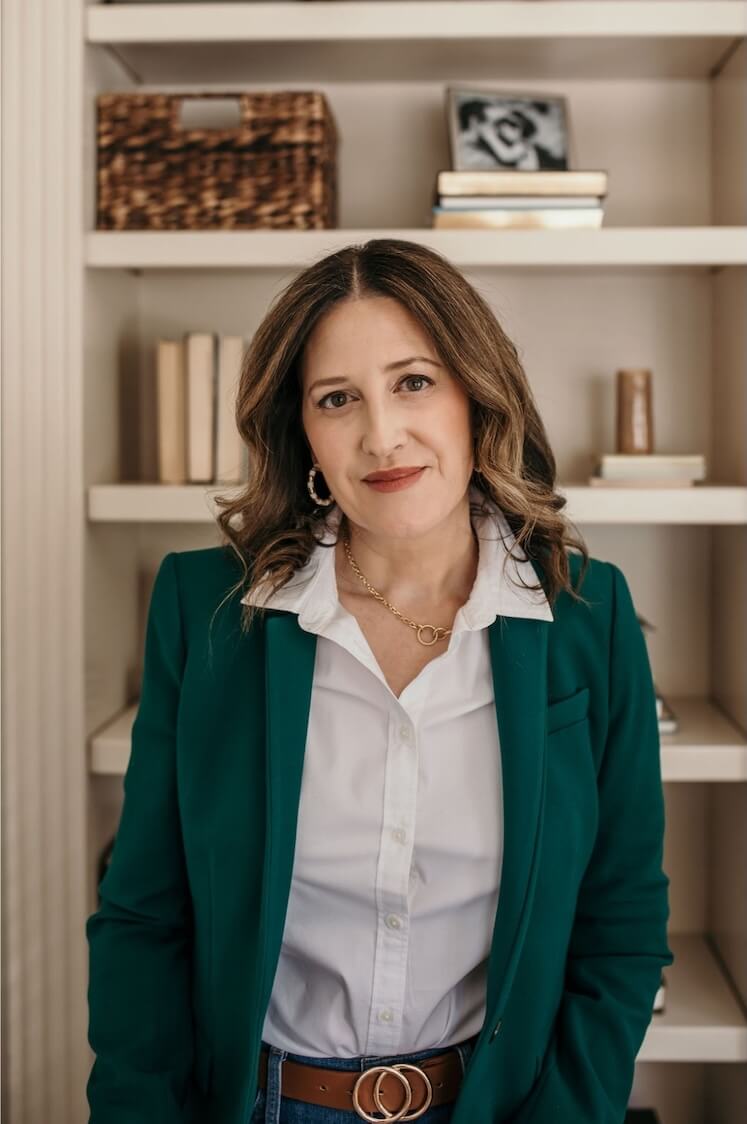
I know what it feels like to be exactly where you are right now — staring at requirements, wondering if you’re actually qualified for this, and somewhere in the back of your mind asking: but what if I mess this up?
Here’s what 20+ years in education and homeschooling my own four kids has taught me: the parents who do this well are not the ones with teaching degrees. They’re the ones who care deeply, who stay curious, and who show up for their kids every single day. That’s why you’re here. That’s the qualification that matters.
Colorado’s requirements under Option 1 are genuinely manageable. A notice of intent. A list of required subjects. Attendance and immunization records. An evaluation every few years with your choice of method. That framework leaves enormous room for you to create something extraordinary for your family — and you will.
If you want to go deeper — not just the legal requirements, but the full picture of how to build a homeschool that actually works — my book Homeschool Rising, published by Wiley, was written for exactly this season. And when you’re ready for an ongoing community of families who get it, Thrive Homeschool Community is where we do life together every day.
Start with the Roadmap below. You’ve already taken the hardest step.
Start Your Colorado Homeschool Journey — Free
The exact 8 steps to start your homeschool — in order, without the chaos. A 26-page roadmap and a free 3-part training video series, delivered instantly.
Start Here: Free Homeschool Roadmap →Free · Instant access · No spam
Want to Go Deeper? Start With These Episodes.
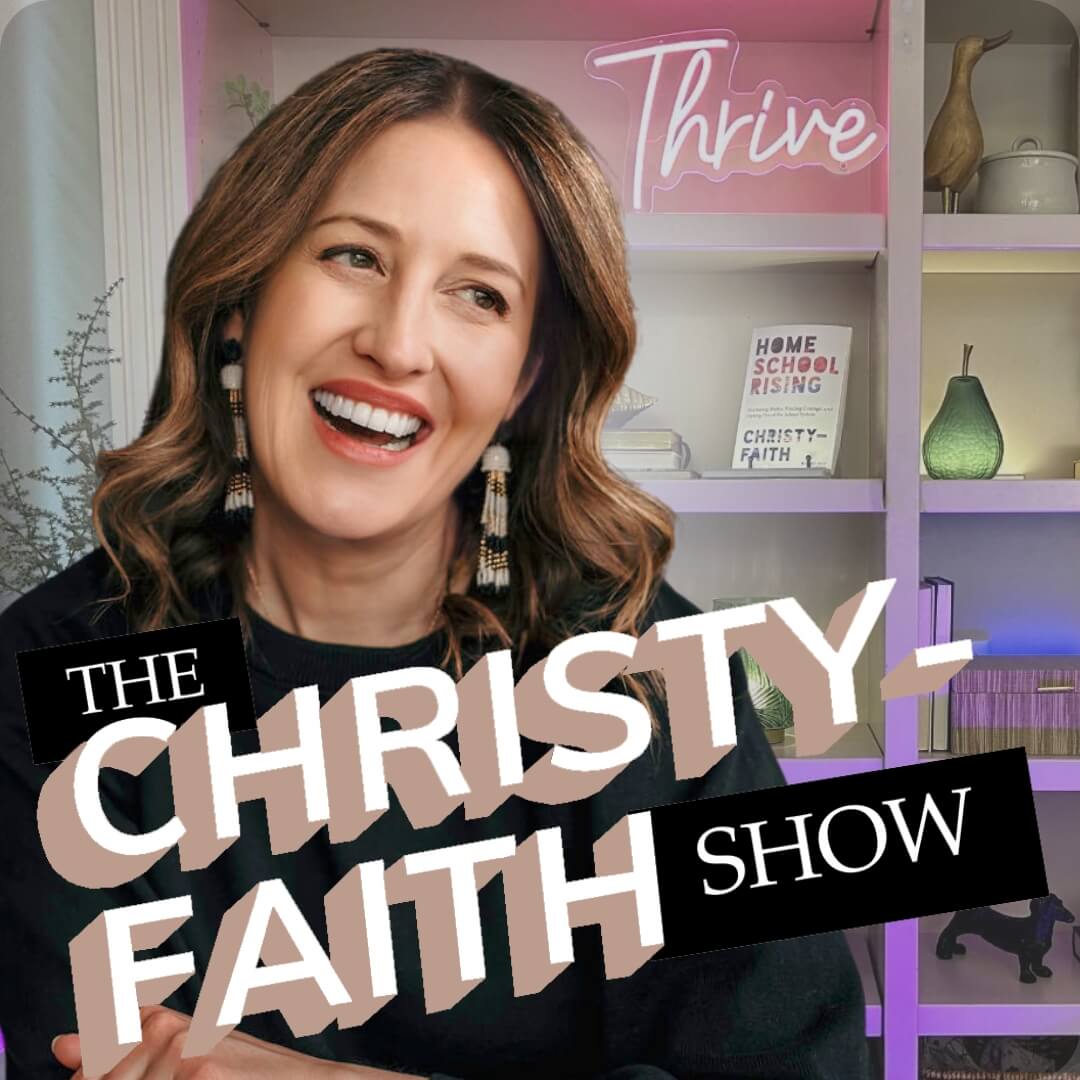
Three episodes of The Christy-Faith Show built specifically for families just starting out. Listen in order — each one picks up exactly where the last left off.
How to Start Homeschooling (Part 1/3) — The Legal Stuff & Choosing the Right Approach
Colorado’s legal framework explained clearly, your homeschool approach options, and exactly how to choose the right path for your family.
Listen now →Finding Homeschool Curriculum & Resources // How to Start Homeschooling (Part 2/3)
How to find curriculum without getting overwhelmed — and the mistake almost every new homeschool family makes when buying their first materials.
Listen now →Creating Your Schedule & Finding Socialization // How to Start Homeschooling (Part 3/3)
Build a schedule that works for real family life, and find your Colorado homeschool community — the socialization question answered for good.
Listen now →Colorado Homeschool Resources
- Free Curriculum Recommendations — Christy-Faith’s curated list of the most reputable homeschool programs, by subject
- The New Homeschooler Roadmap — Free 26-page guide + 3-part training video series
- How to Homeschool by State — Guides for all 50 states
- Thrive Homeschool Community — Ongoing support, encouragement, and community
- Homeschool Rising by Christy-Faith — Published by Wiley. The foundational guide for new homeschool families.
- Christy-Faith’s List — Curated Colorado homeschool resources and organizations

Disclaimer: The information on this page is intended for general guidance only — not legal advice. It reflects our best understanding of the state Department of Education as of April 2026. Homeschool laws can change. Always verify current requirements with an up-to-date legal source. Last update: April 2026.

