


How to Homeschool in Florida
Homeschooling is completely legal in Florida and has been protected by law since 1985. Florida offers three legal paths for homeschooling families, and the one you choose determines your specific requirements. Most families homeschool under the state’s home education statute — which requires a one-time notice of intent, a portfolio of your child’s work, and an annual educational evaluation. There are no mandated subjects, no minimum instruction hours, and no teaching credentials required for parents. Whether you’re pulling your child out mid-year or planning ahead for next fall, here’s a clear breakdown of every requirement and how to get started with confidence.
Start Here: Free Homeschool Roadmap →Free · 26-page guide + 3-part training video series · Instant access
Is Homeschooling Legal in Florida?
Yes — homeschooling is completely legal in Florida. The right to provide home-based education is protected under Florida Statutes § 1002.41, which has been in place since 1985. Florida is classified as a low regulated state.
Florida law provides the following three legal options for homeschooling families:
- Option 1 — Home Education Program (§ 1002.41): The most common path. Requires a one-time written Notice of Intent to your county superintendent, a portfolio of your child’s work, and an annual educational evaluation. No mandated subjects, no minimum instruction hours, and no teaching credentials required for parents. This is what the rest of this guide covers in detail.
- Option 2 — Umbrella or Private School (§ 1002.42): Enroll your child in a registered Florida private school that will oversee your home instruction. Often called an “umbrella school” or “cover school.” Requirements — including the 180-day attendance requirement and immunization records — are set by that private school. Contact the school directly for its specific rules.
- Option 3 — Private Tutor (§ 1002.43): Your child’s instructor must hold a valid Florida teaching certificate for the specific subjects and grade levels being taught. A 180-day attendance requirement applies. The certified instructor is responsible for all record-keeping and required reports. This option is available but impractical for most families without a certified teacher in the home.
The steps, requirements, and FAQs below apply specifically to Option 1 — the Home Education Program under § 1002.41, which is the path most Florida families follow.
For the vast majority of Florida families, Option 1 — the Home Education Program — is the clearest and most straightforward path. It requires no teaching credentials, no mandated subjects, no minimum instruction hours, and the annual evaluation options are genuinely flexible. The one-time notice takes minutes to file. The law gives you real freedom.
Option 3 (Private Tutor) is only worth considering if someone in your household already holds a valid Florida teaching certificate and will serve as the primary instructor. For everyone else — which is most families — Option 1 is where to start, and it’s more than sufficient to build an excellent homeschool.
Florida Homeschool Requirements at a Glance
The information below applies to Option 1 — the Home Education Program under § 1002.41. Options 2 and 3 have different requirements.
| Requirement | Florida Details (Home Education Program — § 1002.41) |
|---|---|
| Compulsory School Age | Children who have attained the age of 6 years, or who will attain age 6 by February 1 of the school year, through the age of 16. (§ 1003.21) |
| Notification Required? | Yes — one-time written Notice of Intent filed with the county school superintendent within 30 days of beginning the home education program. Not annual. A new notice is required only if you move to a different county in Florida. |
| NOI Must Include | Full legal names, addresses, and birthdates of all children enrolled. Must be signed by the parent. |
| Required Subjects | None specified. Florida’s home education statute does not mandate any particular subjects. Parents choose their own curriculum content. |
| Instruction Hours Required | None. Home education programs are excluded from the requirements of a school day. (§ 1002.41(3)) |
| Teacher Qualifications | None. Parents are not required to hold a teaching certificate or any specific degree. |
| Assessment Required | Yes — an annual educational evaluation is required every year, documenting the student’s educational progress at a level commensurate with ability. Five evaluation options are available. Results must be filed annually with the county superintendent. |
| Record-Keeping | Portfolio required: (1) a contemporaneous log of educational activities designating reading materials by title; (2) samples of student writings, worksheets, workbooks, or creative materials. Portfolio preserved for 2 years; available for inspection upon 15 days’ written notice from the superintendent. |
| Regulation Level | Low |
How to Start Homeschooling in Florida: Step by Step
The following steps apply to Option 1 — homeschooling under Florida’s Home Education Program (§ 1002.41), which is the most common path for Florida families.
Choose Your Homeschool Option
Florida law provides three ways to legally homeschool: the Home Education Program (§ 1002.41), an umbrella or private school (§ 1002.42), or a private tutor (§ 1002.43). For most families, Option 1 — the Home Education Program — is the right starting point. It requires no teaching credentials, imposes no subject mandates, sets no minimum instruction hours, and gives you the most flexibility to build the education that works for your family. Review all three options in Section 2 above, then decide before proceeding to the steps below.
File Your Notice of Intent with Your County School District Superintendent
Under the Home Education Program, Florida law requires you to file a written Notice of Intent with your county school district superintendent within 30 days of establishing your home education program. This is a one-time filing — not an annual requirement. You do not re-file each year. Your notice must include: the full legal names, addresses, and birthdates of all children enrolled in your home education program, and must be signed by you as the parent.
By law, the superintendent must accept your notice and immediately register your home education program upon receipt. The district may not require any additional information or verification beyond what the statute specifies. We recommend sending all correspondence by Certified Mail — Return Receipt Requested and keeping copies for your records. If you move to a different county in Florida, you will need to file a new Notice of Intent with your new county’s superintendent.
Notice of Termination: When you complete or end your home education program — whether because your child graduates, re-enrolls in school, or your family moves out of the county — you must file a written Notice of Termination with your county superintendent within 30 days, along with a copy of your child’s most recent annual evaluation.
Formally Withdraw Your Child from Their Current School
If your child is currently enrolled in a public or private school, formally withdraw before you begin homeschooling. Write a withdrawal letter addressed to the principal of your child’s current school, stating that your child is withdrawing to begin a home education program. Send it by Certified Mail — Return Receipt Requested and keep all documentation, including postal receipts and any response from the school.
Some local schools may have specific withdrawal forms or procedures. Contact your school to ask. If your child has never been enrolled in a public or private school, this step does not apply to you.
Build and Maintain Your Portfolio
Under Florida’s home education statute, you are required to maintain a portfolio of records and materials for each child. The portfolio must contain two things: first, a log of educational activities made contemporaneously with instruction (meaning as you go, not retroactively) that designates by title any reading materials used; and second, samples of your child’s work — writings, worksheets, workbooks, or creative materials used or developed by the student.
You determine the content and organization of the portfolio. Florida law does not mandate any specific subjects, curriculum provider, or instructional approach — that freedom belongs entirely to you. The portfolio must be preserved for at least 2 years and made available for inspection by the superintendent upon 15 days’ written notice. Before spending anything on curriculum, download Christy-Faith’s free Curriculum Recommendations — a curated list of the most reputable homeschool programs on the market, organized by subject.
Complete Your Child’s Annual Educational Evaluation and File It with the Superintendent
Under the Home Education Program, you are required to provide an annual educational evaluation every year, documenting your child’s educational progress at a level commensurate with their ability. You choose the evaluation method from five options available under the statute (see the Assessment section below). Once completed, you must file a copy of the evaluation annually with the county superintendent’s office in the county where your child resides.
If the superintendent determines that your child has not demonstrated sufficient educational progress, you will receive written notification and a one-year probationary period to provide remedial instruction. At the end of that year, your child will be re-evaluated. Continuation of your home education program depends on your child demonstrating progress commensurate with their ability at the end of the probationary period.
How to Withdraw Your Child from Public School in Florida
If your child is currently enrolled in a public or private school, formally withdraw before you begin homeschooling. If you are starting mid-year, do this before your child’s first day of home instruction. If you are starting after the school year ends, withdraw before the new school year begins so the school does not mark your child as absent or truant.
Here is the recommended approach:
- Write a withdrawal letter addressed to the principal of the school your child currently attends. State clearly that your child is withdrawing to begin a home education program under Florida Statutes § 1002.41.
- Send by Certified Mail — Return Receipt Requested. This creates a documented paper trail of the date and delivery.
- Keep copies of everything — your letter, postal receipts, and any written responses from the school.
- Local schools may have specific forms or procedures. Contact the school to ask about their process.
- If your child has never attended a public or private school, this section does not apply to you.
For more on navigating the legal framework and getting started with confidence, listen to Episode 101 of The Christy-Faith Show, which covers the legal structure of homeschooling and how to make your transition smooth.

Florida Homeschool Notification Requirements
Under the Home Education Program, Florida requires a written Notice of Intent filed with your county school district superintendent. Here is what the law requires:
- Who receives the notice: The district school superintendent of the county in which you reside. (§ 1002.41(1)(a))
- When to file: Within 30 days of establishing your home education program. You may begin homeschooling and file within that 30-day window. Filing before you begin is also acceptable and recommended.
- Is it annual? No. This is a one-time filing. You do not re-file the Notice of Intent each year. The only exception: if you move to a different county in Florida, you must file a new notice with your new county’s superintendent.
- What to include: The full legal names, addresses, and birthdates of all children enrolled in the home education program. The notice must be signed by the parent.
- No specific form required: A written letter is sufficient.
- How to send it: We recommend Certified Mail — Return Receipt Requested. Keep a copy of your letter and your postal receipt.
- What the district must do: By law, the superintendent must accept your notice and immediately register your home education program. The district may not require any additional information or verification unless your child chooses to participate in a school district program or service. No grade level may be assigned without your child’s participation in a district program.
The Notice of Intent is a notification — not a request for permission. The district does not approve or deny your choice to homeschool under the Home Education Program.
Homeschool Assessment Requirements in Florida
Under the Home Education Program, Florida requires an annual educational evaluation every year for each enrolled child. The evaluation must document the student’s educational progress at a level commensurate with her or his ability. Florida gives you five options for how to fulfill this requirement:
- Option 1 — Portfolio review by a Florida certified teacher: A teacher you select reviews the portfolio and discusses it with your child. That teacher must hold a valid regular Florida certificate to teach academic subjects at the elementary or secondary level.
- Option 2 — Nationally normed student achievement test: Your child takes any nationally normed student achievement test, administered by a certified teacher.
- Option 3 — Florida state student assessment test: Your child takes a state assessment test used by the school district, administered by a certified teacher, at a location and under testing conditions approved by the district.
- Option 4 — Licensed psychologist evaluation: Your child is evaluated by an individual holding a valid, active license under § 490.003(7) or (8) of Florida Statutes.
- Option 5 — Mutually agreed-upon measurement tool: Any other valid measurement tool mutually agreed upon by the county superintendent and the parent.
Where to file: A copy of the completed evaluation must be filed annually with the county superintendent’s office in the county where your child resides. (§ 1002.41(1)(f))
What happens if the evaluation shows insufficient progress: The superintendent will notify you in writing that sufficient educational progress has not been demonstrated. From the date of that written notification, you have one year to provide remedial instruction. At the end of that year, your child is re-evaluated under § 1002.41(1)(f). Continuation of your home education program depends on your child demonstrating progress commensurate with their ability at that re-evaluation. There is no specific percentile threshold — the standard is ability-commensurate progress.
Note on Florida state standardized tests: Florida state tests (such as the FAST assessment) may be used to satisfy the annual evaluation requirement under Option 3 only if administered by a certified teacher under conditions approved by the district. Participation in state testing is voluntary for home education students and does not automatically satisfy the annual evaluation filing requirement without following the procedures in § 1002.41(1)(f).
Frequently Asked Questions About Homeschooling in Florida
Yes — completely legal. Homeschooling in Florida is protected under Florida Statutes § 1002.41, which has been in place since 1985. Florida classifies as a low regulated state and provides three distinct legal options for families: the Home Education Program, enrollment in an umbrella or private school, and the private tutor option. The great majority of Florida homeschool families use the Home Education Program.
Yes — if you are homeschooling under the Home Education Program (Option 1). You must file a written Notice of Intent with your county school district superintendent within 30 days of beginning your home education program. Importantly, this is a one-time filing, not an annual requirement. You file it once. Include the full legal names, addresses, and birthdates of all children enrolled, and sign the notice. The district must accept it and immediately register your program — they cannot require additional information beyond what the statute specifies.
Under the Home Education Program, none. Florida’s home education statute explicitly states that the parent is not required to hold a valid regular Florida teaching certificate. There are no degree requirements, no background check requirements, and no credential requirements for parents choosing Option 1. If you choose Option 3 (Private Tutor), the instructor must hold a valid Florida teaching certificate for the specific subjects and grades being taught — but that option is distinct from the Home Education Program that most families use.
None — under the Home Education Program. Florida’s home education statute does not specify or mandate any subjects. You choose your own curriculum and content entirely. The law defines home education as “sequentially progressive instruction of a student directed by his or her parent or guardian” and leaves the specifics to you. This is one of the most family-friendly aspects of Florida’s law. The only academic requirement is the annual evaluation showing progress commensurate with your child’s ability.
Yes. There is no requirement to begin at the start of a school year. Under the Home Education Program, file your Notice of Intent with your county superintendent within 30 days of beginning, and formally withdraw your child from their current school before instruction starts. We recommend sending the withdrawal letter by Certified Mail. There is no proration of requirements when starting mid-year — the annual evaluation requirement applies on its own annual cycle from the date you establish your program.
An annual evaluation is required every year under the Home Education Program, but it does not have to be a standardized test. Florida gives you five options: a portfolio review by a Florida certified teacher, a nationally normed achievement test administered by a certified teacher, a Florida state assessment test administered by a certified teacher under district-approved conditions, an evaluation by a licensed psychologist, or any other valid measurement tool mutually agreed upon by you and the superintendent. Most Florida homeschool families use either the portfolio review or a nationally normed test. The evaluation results must be filed annually with your county superintendent.
Florida’s compulsory school attendance law (§ 1003.21) applies to children who have attained the age of 6 years, or who will attain age 6 by February 1 of the current school year, through the age of 16. Once a child reaches age 16, compulsory attendance no longer applies, though we recommend continuing to comply with homeschool requirements if your child is still completing their secondary education. The home education statute (§ 1002.41) satisfies the compulsory attendance requirement when properly followed.
Under the Home Education Program, you are required to maintain a portfolio for each child. The portfolio must contain two things: first, a log of educational activities made contemporaneously with instruction (meaning as you go, not after the fact) that designates by title any reading materials used; and second, samples of your child’s work — writings, worksheets, workbooks, or creative materials the student used or created. You determine the content and organization of the portfolio. It must be preserved for at least 2 years and made available to the superintendent upon 15 days’ written notice. The portfolio is also the basis for one of your annual evaluation options (portfolio review by a Florida certified teacher).
You Can Do This
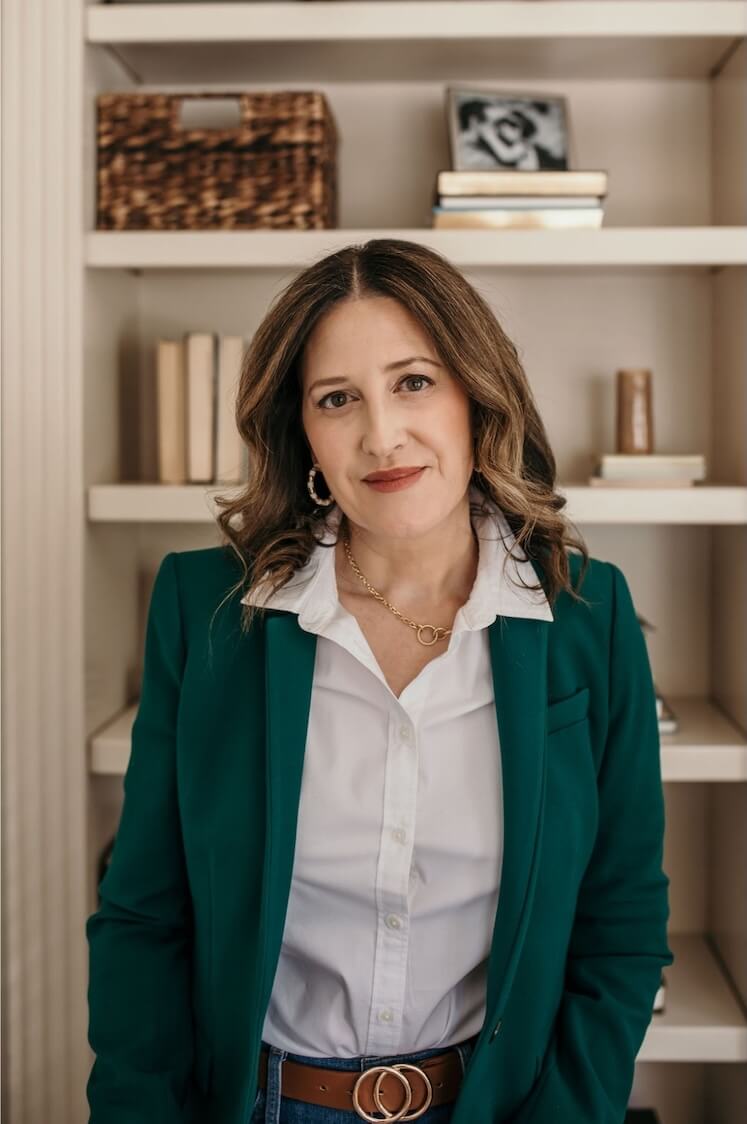
I know what it feels like to be exactly where you are right now — staring at requirements, wondering if you’re actually qualified for this, and somewhere in the back of your mind asking: but what if I mess this up?
Here’s what 20+ years in education and homeschooling my own four kids has taught me: the parents who do this well are not the ones with teaching degrees. They’re the ones who care deeply, who stay curious, and who show up for their kids every single day. That’s why you’re here. That’s the qualification that matters.
Florida’s home education law is genuinely family-friendly. There are no mandated subjects, no minimum instruction hours, and no required curriculum. What’s required is a one-time notice, an annual evaluation to document your child’s progress, and a simple portfolio of your child’s work. That framework leaves enormous room for you to create something extraordinary for your family — and you will.
If you want to go deeper — not just the legal requirements, but the full picture of how to build a homeschool that actually works — my book Homeschool Rising, published by Wiley, was written for exactly this season. And when you’re ready for an ongoing community of families who get it, Thrive Homeschool Community is where we do life together every day.
Start with the Roadmap below. You’ve already taken the hardest step.
Start Your Florida Homeschool Journey — Free
The exact 8 steps to start your homeschool — in order, without the chaos. A 26-page roadmap and a free 3-part training video series, delivered instantly.
Start Here: Free Homeschool Roadmap →Free · Instant access · No spam
Want to Go Deeper? Start With These Episodes.
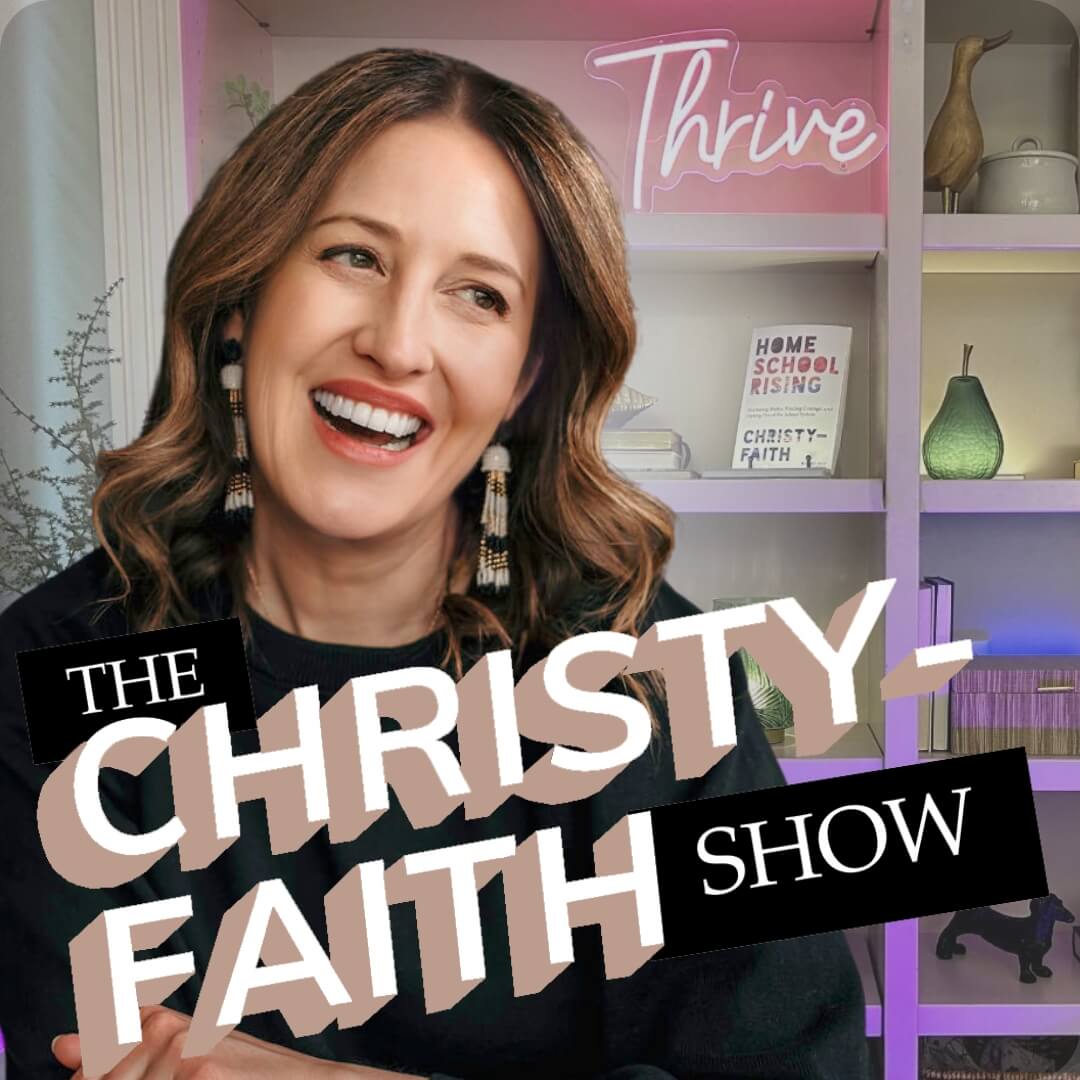
Three episodes of The Christy-Faith Show built specifically for families just starting out. Listen in order — each one picks up exactly where the last left off.
How to Start Homeschooling (Part 1/3) — The Legal Stuff & Choosing the Right Approach
Florida’s legal framework explained clearly, your homeschool approach options, and exactly how to choose the right path for your family.
Listen now →Finding Homeschool Curriculum & Resources // How to Start Homeschooling (Part 2/3)
How to find curriculum without getting overwhelmed — and the mistake almost every new homeschool family makes when buying their first materials.
Listen now →Creating Your Schedule & Finding Socialization // How to Start Homeschooling (Part 3/3)
Build a schedule that works for real family life, and find your Florida homeschool community — the socialization question answered for good.
Listen now →Florida Homeschool Resources
- Free Curriculum Recommendations — Christy-Faith’s curated list of the most reputable homeschool programs, by subject
- The New Homeschooler Roadmap — Free 26-page guide + 3-part training video series
- How to Homeschool by State — Guides for all 50 states
- Thrive Homeschool Community — Ongoing support, encouragement, and community
- Homeschool Rising by Christy-Faith — Discover why there is no better place to educate a child than in a loving home with a motivated parent.
- Christy-Faith’s List — Curated Florida homeschool resources and organizations

Homeschooling in a Neighboring State?
Every state has its own requirements. Find the complete guide for yours:
Disclaimer: The information on this page is intended for general guidance only — not legal advice. It reflects our best understanding of the state Department of Education. Homeschool laws can change. Always verify current requirements with an up-to-date legal source. Last update: April 2026.

